
There has been a whole host of research in this area so deciphering the literature can be a difficult task. Thankfully, a recent paper by Blagrove et al [1] has done much of the hard work for us. The paper entitled Effects of Strength Training on the Physiological Determinants of Middle- and Long-Distance Running Performance: A Systematic Review aimed to provide a comprehensive critical commentary on the current literature that has examined the effects of strength training modalities on the physiological determinants and performance of middle and long-distance runners. They also offered recommendations for best practice which you can read about in the Part 2 blog post.

VO2max vs. Running Economy
The difference between VO2max in the elite running population however is surprisingly marginal. On the contrary, running efficiency displays a high degree of inter-individual variability and thus a potential area to better discriminate between runners and their respective performance [3]. Defined as the oxygen or energy cost of sustaining a given sub-maximal running velocity, running efficiency is underpinned by a variety of anthropometric, physiological, biomechanical, and neuromuscular factors [4]. More specifically to the purpose of this article, force generation and stretch–shortening cycles are the neuromuscular factors that are the most relevant.
The Role of Force Production
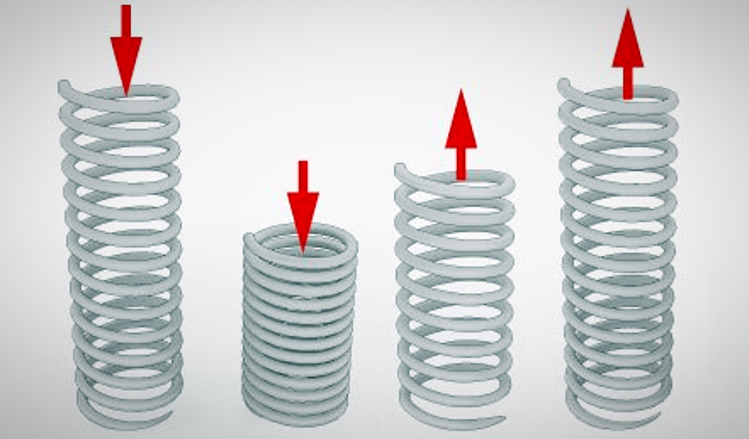
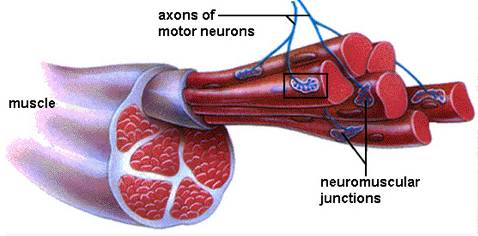
Whilst force production of a muscle is a straight forward concept, the stretch shortening cycles may not be. Stretch shortening cycles describe the pre-stretch and recoil action of a muscle and tendon unit that occurs in a dynamic action just as jumping. Think of the stretch shortening cycle like a spring whereby energy is stored and released within the spring, or in real terms, the musculo-tendinous unit. To produce higher forces, the more motor units (muscle) are required [5]. There is a strong correlation between the cross-sectional area of a muscle and its ability to produced force. Several other factors are involved, but for the most part, a larger muscle will produce more force than a smaller muscle. However, force production becomes more difficult when activities are dynamic. This is because there is a reduction in force produced per motor unit due to the faster shortening velocity involved in the stretch shortening cycle [5].
How Strength Training Helps
In general, strength training activities can positively affect both muscle force as well as improve the stretch-shortening cycle through several different adaptations including muscular and neural changes [6, 7]. Hypertrophy is the term to describe an increase in muscle size. It is the cyclical process whereby muscle cells are exposed to repeated bouts of exercise causing micro damage to the muscle cells. Micro damage causes an inflammatory response and it is the pain you feel for the next 48hrs after a bout of exercise (also called delayed onset muscle soreness or DOMS for short). It is also the stimulus for the body to mitigate future damage by repairing the damaged tissue and adding more muscle cells. This is what is commonly known as the super compensation cycle. Hypertrophy is aided by rest, dietary protein, certain hormones (e.g testosterone) and has a very strong genetic component as well [7].
Neural adaptation tends to be one of the earliest changes and accounts for most of the strength increases observed in the initial stages of all strength training [8]. Those who are exposed to repeated bouts of resistance training generate significant strength gains with minimal hypertrophy early in the process. The body achieves this via synchronous activation (the ability to recruit more muscle cells in a simultaneous fashion) and reduction in neural inhibition (a natural response of the central nervous system to feedback signals arising from the muscle) [9]. Inhibition allows muscle to avoid overworking and potentially damaging itself due to unaccustomed load. This response is rapid as it utilises the nerve and muscle cells already present. These adaptations are in direct contrast to the untrained muscle in which atrophy (muscle wastage) and reduced neural drive are typical.
What this all boils down to is that following a period of strength training there is an increase in absolute motor unit recruitment resulting in a lower relative intensity of that muscle unit to deliver the same outcome as previous. If the bouts are habitual and frequent enough, muscle cells hypertrophy and become larger, increasing their ability to generate force. As a result, the trained muscle will be able to recruit a higher threshold of larger motor units. Combine all of this with an enhanced stretch shortening cycle and you have some excellent adaptations to improve running efficiency.
With respect to the dosage, the Blagrove paper suggested, a strength training intervention, lasting 6–20 weeks, added to the training program of a distance runner appears to enhance running efficiency by 2–8%. In real terms, an improvement in running efficiency of this magnitude should theoretically allow a runner to operate at a lower relative intensity and thus improve training and/or race performance. Improvements were observed in moderately-trained, well-trained and highly-trained participants, suggesting runners of any training status can benefit from strength training. For the particulars of the dosage, exercise selection and periodisation, check out Part 2 blog post.
Watch: Strength exercise demonstrations
Bent-knee calf raises — machine and barbell
Feet-elevated barbell hamstring bridge variations
Until next time, Praxis What You Preach
📍 Clinics in Teneriffe, Buranda, and Carseldine
💪 Trusted by athletes. Backed by evidence. Here for everyone.
References:
- RC. Blagrove, G Howatson, PR. Hayes. Effects of Strength Training on the Physiological Determinants of Middle- and Long-Distance Running Performance: A Systematic Review, Sports Med. 2018; 48(5):1117-1149
- McLaughlin JE, Howley ET, Bassett DR Jr, et al. Test of the classic model for predicting endurance running performance. Med Sci Sports Exerc. 2010;42(5):991–7
- Morgan DW, Craib M. Physiological aspects of running economy. Med Sci Sports Exerc. 1992;24(4):456–61.
- Saunders PU, Pyne DB, Telford RD, Hawley JA. Factors affecting running economy in trained distance runners. Sports Med. 2004;34(7):465–85.
- Barnes KR, Kilding AE. Running economy: measurement, norms, and determining factors. Sports Med. 2015;1(1):8–15
- Denadai BS, de Aguiar RA, de Lima LC, et al. Explosive training and heavy weight training are effective for improving running economy in endurance athletes: a systematic review and meta-analysis. Sports Med. 2017;47(3):545–54
- Schoenfeld BJ, Ogborn D, Krieger JW. Effects of resistance training frequency on measures of muscle hypertrophy: a systematic review and meta-analysis. Sports Med. 2016;46(11):1689–97
- Aagaard P , Simonsen EB , Magnusson SP , Andersen JL , Dyhre-Poulsen P. .Enhanced motoneuron activation as effect of heavy-resistance strength training in man.Med Sci Sports Exerc 29: S23-1997.
- Aagaard, P., E. B. Simonsen, J. L. Andersen, S. P. Magnusson, J. Halkjær-Kristensen, and P. DyhrePoulsen. Neural inhibition during maximal eccentric and concentric quadriceps contraction: effects of resistance training. J Appl Physiol 89: 2249–2257, 2000
Related Articles
Strong Bones, Strong Runner: Understanding and Treating Stress Fractures

Shin Splints: Causes, Treatment & How to Get Back to Running Stronger