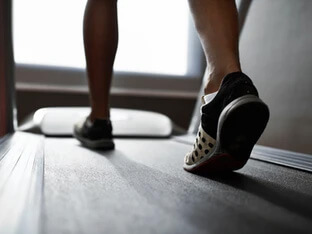
Shin splints? Painful knee with jumping? Recurrent ankle sprains? These are the types of injuries we fix day in and day out at Praxis Physio. There are a number of recommended paths for rehabilitation in these injuries backed by research and our clinical experience, but has the evidence been missing something? There’s been growing social media traction in the fitness and exercise world around tibialis anterior (TA) loading as a ‘cure all’ for lower limb injuries. Being the physio nerds that we are, we looked into it for you!
What Is the Tibialis Anterior?
The tibialis anterior is located on the front (anterior) portion of the shin (tibia) – hence the name. Its role is to lift the foot (dorsiflexion) and provide some stability to the outside of the ankle. This action is key for walking and running, especially when negotiating steps and hills, since the foot needs to clear a certain height before landing. It’s also critical when landing from a height or changing direction rapidly, acting as a shock absorber for the knee and ankle joints.
Common Tibialis Anterior Problems We See
Like any muscle or joint in the body, the TA is not without its problems. Physios regularly see patients with pain and stiffness around the shin muscles, including:
- Shin splints
- Compartment syndrome
- Patellofemoral pain syndrome (aka runner’s knee)
- General ankle joint pain and stiffness after a sprain
The Social Media Training Trend
As mentioned, there has been a lot of discussion lately in the strength and conditioning community about whether training this muscle can prevent or treat musculoskeletal conditions, such as the ones mentioned above. Anecdotally, training of the TA has been credited with several benefits. Specific athletes have explained that they have seen improvements in vertical jump height, running speed, running stamina and squat depth. From a prevention and treatment point of view, it has been said that training the TA has helped improve symptoms associated with knee pain, ankle pain and shin splints. Also let us not forget, that from an aesthetics point of view, a strong and bulky looking TA does make our legs look more attractive, as bodybuilders would argue.
What Does the Evidence Actually Say?
Unfortunately, the scientific community has not provided strong evidence that training the TA can aid in affecting the above musculoskeletal pathologies, or attain the performance benefits. So what do we know from previous scientific literature? Well, Munoz et al. (2015) describes the tibialis anterior as key during an efficient gait cycle as well as being critical for balance control. Furthermore, an increase in strength of the TA helps greatly reduce the risk of falling. Maharaj et al. (2019) confirms that during walking and running, the TA’s tendinous tissue absorbs energy on contact and controls foot position during the swing phase.
The proposed mechanisms to aid in athletic performance include:
- Increased ankle stability: Strong tibialis anterior muscles provide better stability to the ankle joint during jumping movements. This stability allows for improved force transmission from the lower leg to the foot, enabling athletes to generate greater power and maintain proper alignment during takeoff and landing.
- Enhanced dorsiflexion range of motion: Adequate dorsiflexion range of motion is essential for optimal jumping performance. Strengthening the tibialis anterior helps to improve flexibility and mobility in the ankle joint, allowing athletes to achieve a greater degree of dorsiflexion during the pre-jump phase. This increased range of motion enables a longer and more powerful push-off, resulting in higher jumps.
- Improved jump height and explosive power: The tibialis anterior plays a significant role in generating propulsive force during the takeoff phase of a jump. By strengthening this muscle, athletes can produce a more forceful and efficient push-off, leading to increased jump height and explosive power. The ability to generate greater force through dorsiflexion contributes to a more powerful and effective jump.
- Injury prevention: Weak tibialis anterior muscles can contribute to imbalances in the lower leg, potentially leading to various conditions such as shin splints or ankle sprains. Strengthening this muscle group helps to maintain proper muscle balance around the ankle joint, reducing the risk of injuries that could hinder jumping performance.
How to Train the Tibialis Anterior Safely
So if we are to believe TA holds the key to athletic performance and injury mitigation, how do we unlock it?
Physiotherapists often prescribe targeted exercises such as:
- Toe raises
- Resisted dorsiflexion exercises
- Resistance band dorsiflexion drills
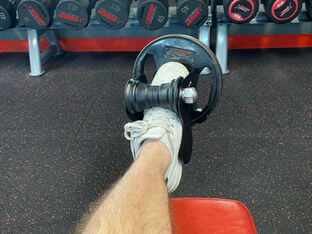
These should be performed in a controlled manner and progressed gradually to build strength and endurance. Below you’ll see variations to load, progress and regress the exercise depending on where you’re starting from. As with any muscle, the TA needs to be progressively overloaded.
Our Take
As physiotherapists, we value evidence-based practice — though this particular muscle probably hasn’t received the scientific attention it deserves. If you’re dealing with lower leg issues, or just haven’t got the bounce you’re after, come and chat to one of our friendly, knowledgeable team. We’ll do a full assessment and help put the spring back in your step!
Until next time, Praxis What You Preach…
📍 Clinics in Teneriffe, Buranda, and Carseldine
💪 Trusted by athletes. Backed by evidence. Here for everyone.
References:
Maharaj JN, Cresswell AG, Lichtwark GA. Tibialis anterior tendinous tissue plays a key role in energy absorption during human walking. J Exp Biol. 2019 Jun 4;222(Pt 11):jeb191247. doi: 10.1242/jeb.191247. PMID: 31064856.
Ruiz Muñoz, M., González-Sánchez, M. & Cuesta-Vargas, A.I. Tibialis anterior analysis from functional and architectural perspective during isometric foot dorsiflexion: a cross-sectional study of repeated measures. J Foot Ankle Res 8, 74 (2015). https://doi.org/10.1186/s13047-015-0132-3
Related Articles
Plantar Fasciopathy: Understanding how to heal your heel pain
Achilles Tendinopathy: How to treat your Achilles Pain