
If you’ve ever tried to reach behind your back to do up a bra strap, tuck in a shirt, or grab your wallet from your back pocket, and found your shoulder simply won’t get there anymore, you might be dealing with a frozen shoulder. It doesn’t usually start that way. It normally starts as a dull, nagging ache that gets worse at night, then slowly, month by month, the shoulder just stops moving the way it used to.
And then comes the question every patient eventually asks us: why is this taking so long, and what am I actually supposed to do about it?
Let’s unpack it during this installment of Praxis What You Preach.
WHY YOUR SHOULDER ACTUALLY FREEZES
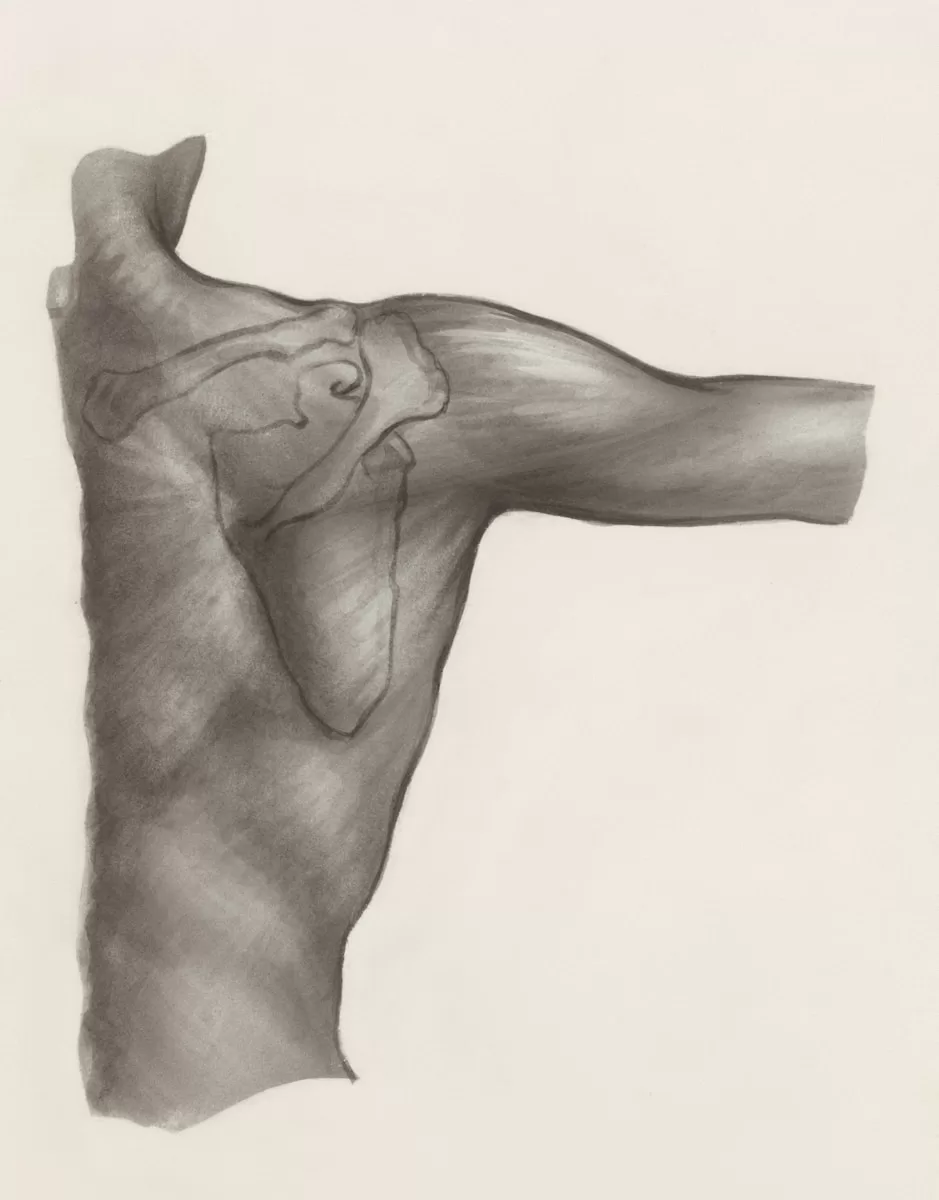
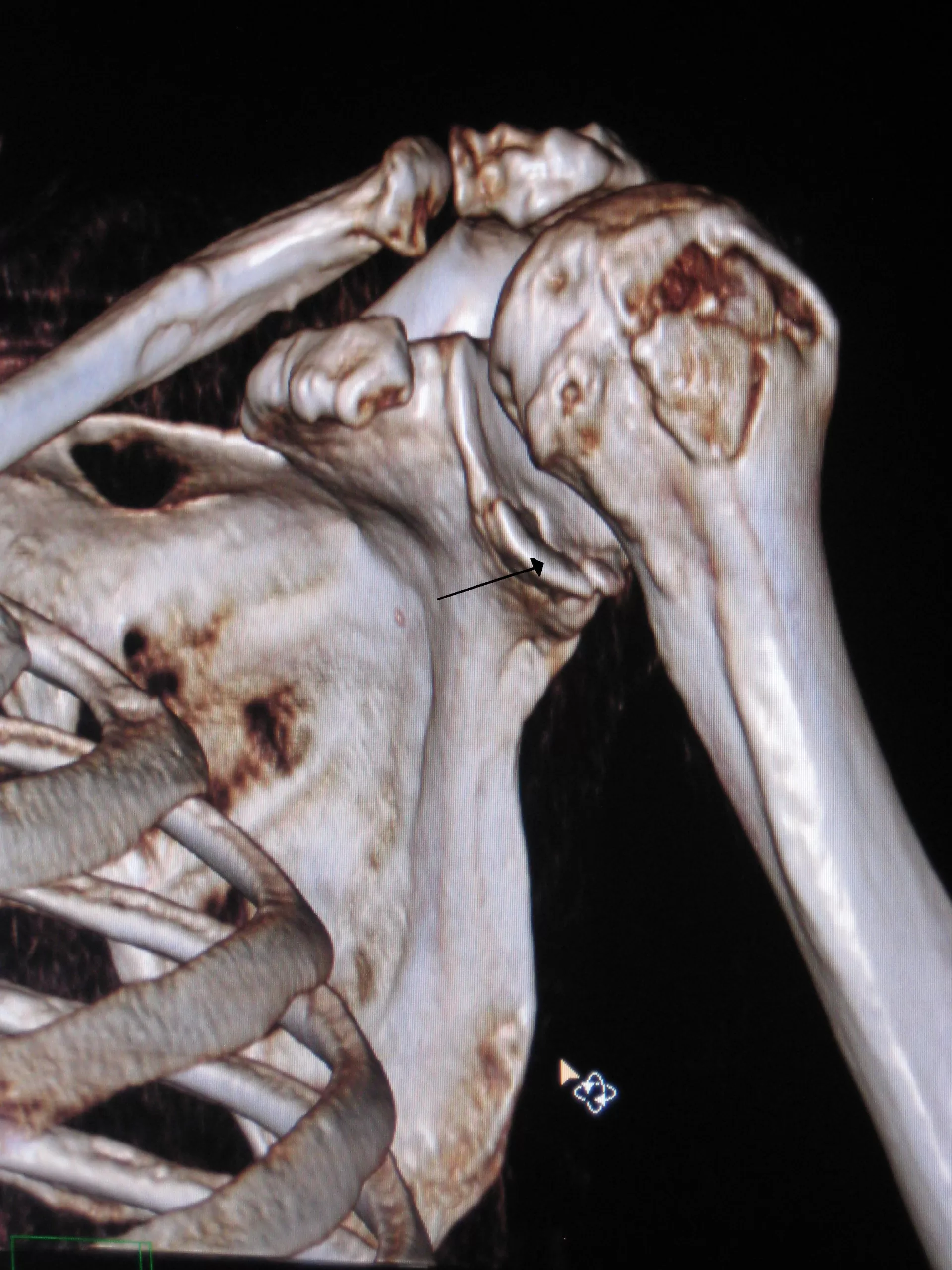
Frozen shoulder, also called adhesive capsulitis, is a genuine change in the tissue of the shoulder joint, not just tightness or “guarding” from pain. The capsule surrounding the shoulder joint becomes inflamed, and over time, cells called fibroblasts convert into myofibroblasts, a type of cell that behaves a little like smooth muscle. These cells lay down excess type I and type III collagen and gradually contract, physically shrinking and thickening the capsule around the joint. That’s what restricts the movement. It isn’t a psychological thing, and it isn’t simply pain stopping you from moving. The joint itself has less room to move in, and importantly, nothing in that process is you damaging your shoulder further by using it.
The classic risk factors are diabetes and thyroid disease, and people with diabetes are significantly more likely to develop it. What’s less widely appreciated is a hormonal pattern: frozen shoulder overwhelmingly affects women in their 40s and 50s, and there’s genuine, if still early, research interest in an oestrogen link. A 2026 pilot study found less adhesive capsulitis in postmenopausal women using hormone therapy compared with those not on it, though the difference didn’t reach statistical significance in that small sample. A separate study of shoulder pain in perimenopausal versus premenopausal women found adhesive capsulitis was the leading diagnosis in both groups, but perimenopausal women had significantly more shoulder synovitis specifically. Put together with the diabetes association, a metabolic and hormonal driver behind the capsule’s fibrotic response looks increasingly plausible, even if the exact mechanism isn’t nailed down yet.
THIS IS, AT ITS CORE, A “WAIT IT OUT” CONDITION
Frozen shoulder classically moves through three overlapping stages. The freezing stage is the painful one, where movement becomes progressively more restricted, and this can last anywhere from a couple of months to the better part of a year. The frozen stage is where pain often settles but stiffness dominates, with the shoulder feeling genuinely stuck, and this stage can run for several months on its own. The thawing stage is the slow return of movement, which can take a further six months to two years.
Add that up, and it’s not unusual for the whole process to take one to three years from start to finish. Here’s the honest version of what we tell patients: this is fundamentally a self-limiting condition that resolves largely on its own, on its own biological timeline. That’s genuinely hard to hear when you can’t lift your arm above shoulder height, but understanding it properly is, itself, the single most useful thing we can offer you. Knowing that the stiffness is a normal part of a process that ends, rather than a sign that something is going wrong or that you’re making it worse by moving the arm within your comfortable range, changes how people cope with the months in between. That’s not a consolation prize instead of treatment. For frozen shoulder, solid education about what’s actually happening is a core part of the treatment.
WHAT DOESN’T CHANGE THE TIMELINE
Two treatments come up constantly, and it’s worth being upfront about what they actually do. A corticosteroid injection can meaningfully reduce pain, and for someone in the middle of a miserable freezing stage, that’s genuinely valuable. But it’s symptom control, not a cure. The injection settles inflammation and eases pain; it doesn’t alter the underlying capsular fibrosis or speed up how quickly the capsule remodels and loosens.
Surgery is the other one, whether that’s a manipulation under anaesthesia or an arthroscopic capsular release. The best available evidence, a large UK multicentre randomised trial and the systematic review built around it, found that neither of these surgical options produced clinically superior outcomes compared with structured physiotherapy plus a steroid injection. In other words, going under anaesthesia to have the shoulder manipulated or surgically released hasn’t been shown to get you a better result than the non-surgical pathway, and it comes with its own real risks, including fracture, labral tears, nerve injury and rotator cuff damage. For most people, that’s not a trade worth making.
WHERE PHYSIOTHERAPY ACTUALLY EARNS ITS KEEP
In the freezing and early frozen stages, our role is mostly about pain management, education, and gentle, pain-respecting movement rather than forcing range of motion. Many of our frozen shoulder patients come to us via referral from an orthopaedic surgeon, commonly Dr Kelly McGroarty locally, who may consider a corticosteroid injection to help settle a significant flare during this painful window, alongside the reassurance that this is a self-limiting process.
Where physiotherapy does real, measurable work is once the shoulder starts to thaw. As pain eases and the joint stops being so reactive, that’s when a progressive, graded strengthening and mobility program restores the range of motion and shoulder strength lost over the preceding months, and helps close out the tail end of the condition more completely than simply waiting for it to finish on its own. Supervised exercise during this phase reliably improves range of motion, function and pain, and outperforms a home program done in isolation.
The Takeaway
Frozen shoulder is, at its core, a self-limiting condition that runs its own biological course over one to three years. Cortisone can ease the pain along the way, but doesn’t shorten that course, and surgery hasn’t been shown to produce better outcomes than non-surgical care despite carrying real risks. The single most useful thing you can do early on is understand what’s actually happening in your shoulder and know you’re not damaging it by moving within your comfortable range. Then, once the shoulder starts to thaw, a proper physiotherapy-guided strengthening program is where the real, measurable gains happen.
Book an appointment at one of our Brisbane clinics today and start moving forward with a clear plan.
Until next time, Praxis What You Preach…
📍 Clinics in Teneriffe, Woolloongabba, and Carseldine
💪 Trusted by athletes. Backed by evidence. Here for everyone.
Related Articles
Rotator Cuff Repair: A Physiotherapy Guide on Recovery and Rehabilitation
Shoulder Stabilisation and Bankart Repair: Your Path Back to Sport

The CKCUEST: The Shoulder Stability Test That Predicts Whether You're Really Ready for Contact
References
Challoumas D, Biddle M, McLean M, Millar NL. Comparison of Treatments for Frozen Shoulder: A Systematic Review and Meta-analysis. JAMA Network Open. 2020;3(12):e2029581.
Chan HBY, Pua PY, How CH. Physical therapy in the management of frozen shoulder. Singapore Medical Journal. 2017;58(12):685-689.
Mertens MG, Meert L, Struyf F, Schwank A, Meeus M. Exercise Therapy Is Effective for Improvement in Range of Motion, Function, and Pain in Patients With Frozen Shoulder: A Systematic Review and Meta-analysis. Archives of Physical Medicine and Rehabilitation. 2021;103(5):998-1012.
Millar NL, Meakins A, Struyf F, Willmore E, Campbell AL, Kirwan PD, Akbar M, Moore L, Ronquillo JC, Murrell GAC, Rodeo SA. Frozen shoulder. Nature Reviews Disease Primers. 2022;8(1):59.
Redler LH, Dennis ER. Treatment of Adhesive Capsulitis of the Shoulder. Journal of the American Academy of Orthopaedic Surgeons. 2019;27(12):e544-e554.
Reinke EK, Ford AC, Wahl E, Kennedy J, Poehlein E, Green CL, Saltzman E, Wittstein JR. A preliminary pilot study to address design issues related to research on potential association of hormone therapy and adhesive capsulitis. Climacteric. 2026;29(3):478-483.
Rex SS, Kottam L, McDaid C, Brealey S, Dias J, Hewitt CE, Keding A, Lamb SE, Wright K, Rangan A. Effectiveness of interventions for the management of primary frozen shoulder: a systematic review of randomized trials. Bone & Joint Open. 2021;2(9):773-784.
Yoon S, Lee DH, Bang J. Perimenopausal arthralgia in the shoulder. Menopause. 2018;25(1):98-101.