FACT OR FICTION: Meniscus Tears and knee surgery

FACT OR FICTION: Meniscus Tears and knee surgery

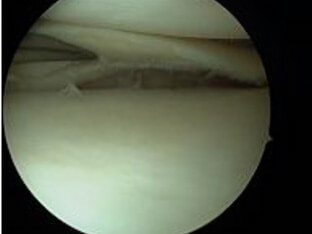
All meniscal tears need surgery 🤔🔪🔪🔪🔪 ???
ANSWER: FICTION

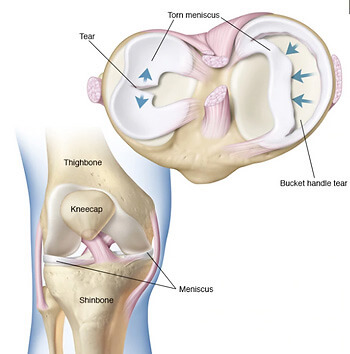
In a recent meta-analysis (multiple studies combined), Kise and colleagues concluded that a small but inconsequential benefit is seen from treatment interventions that involve arthroscopy.

However, this small effect is of short duration and absent one year post surgery. Only 1 in 5 randomised controlled trials found greater pain relief 12 months after partial meniscectomy compared with non-surgical treatment! Further, the supervised exercise therapy showed positive effects over surgery group in improving thigh muscle strength, at least in the short term🙌

If you do NOT have mechanical symptoms (locking specifically), these results should encourage individuals with degenerative meniscal tears and no definitive radiographic evidence of osteoarthritis to consider supervised exercise therapy as a treatment option. Translation: Get strong and get moving under the care of a skilled physio like us at Praxis 💪🏃!

If your knee pain is holding you back, put a spring back into your step with Praxis Physio. We can accurately diagnose your issues, highlight where we can help, and get back on the path to improved function. To make a booking, call (07) 3102 3337 or book online 

#praxisphysio #kneepain #meniscus #mensicaltear #preventprepareperform #praxiswhatyoupreach #praxisblog #degenerativemeniscus #evidencebasedpractice

Reference

Kise N, et al. Exercise therapy versus arthroscopic partial meniscectomy for degenerative meniscal tear in middle aged patients: randomised controlled trial with two year follow-up. Br J Sports Med. 2016.

ROTATOR CUFF TEARS || Do I Need Surgery?

ROTATOR CUFF TEARS || Do I Need Surgery?

That age old question in which the answers seems to be becoming increasingly more difficult to answer. We have looked over the research and tried to simply things for those who are unsure about what to do with their shoulder.

SUMMARY:

  • A rotator cuff (RC) tear is a common cause of pain and disability among adults.
  • There are multiple risk factors for RC tears, but most are down to overactivity of the shoulder joint decreased conditioning of the shoulder complex, which comes with age.
  • Most common in individuals over the age of 40 with linear increase in incidence as we get older.
  • A well-constructed strength program and active lifestyle is pivotal for preventing RC tears.
  • Diagnosis of a RC tear is done through first a physical examination, which is then followed by a positive finding on medical imaging.
  • To two main ways of treating a RC tear is either through conservative management with your physiotherapist or down the surgical route, which is also then followed by physiotherapy rehabilitation.
  • There is evidence for both choices and the decision between the two is down to many factors and the well-trained and experienced physiotherapists at Praxis Physiotherapy can greatly assist you in making the decision!

ANATOMY

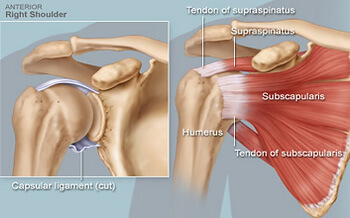
The rotator cuff (RC) muscles are a group of four muscles that act as rotators and stabilisers of the shoulder. These are supraspinatus, infraspinatus, subscapularis and teres minor. Supraspinatus is the most frequently torn of this group.

These muscles work to help raise and rotate your arm for everyday activities such as putting on a t-shirt, combing your hair or putting away dishes on a high shelf. In sport the cuff works as a dynamic stabilisers of the shoulder to help cope with the forces associated with overhead activities such as swimming, tennis serving, throwing or weight lifting. Simply put, the cuff aids in keeping the ball (head) of your upper-arm bone (humerus) in your shoulder socket with movement.

CAUSES, SYMPTOMS & RISK FACTORS

The cause of RC tears is multifactorial. Degeneration (which comes with age), impingement and overload, may all contribute in varying degrees to the development of rotator cuff tears.

Mid Potion Achilles Tendinopathy Location

This disease is primarily of middle aged and older patients with observational data reveals a nearly linear increase in the frequency of rotator cuff tears with age. Pain with movement and function is one of the biggest symptoms of a rotator cuff tear. However, it is important to know that a sizeable portion of rotator cuff tears are actually asymptomatic and don’t cause the person any pain or discomfort! A study by Minagawa and Yamamoto in 2013 found that in a screening of 664 village residents, 147 subjects had RC tears on a medical imaging screening. Surprisingly 65% of them had no symptoms at all and didn’t have any shoulder complaints.

Why is this important? Well if you end up going to a GP and he/she send you for a scan and finds a torn RC, most will assume that it is the cause of them pain, but as seen in the study this is definitely not always the case. Before it can be decided whether the RC tear is the causes of the pain there are numerous structures in and around the shoulder that have to be examined and “crossed off the list” of possible causes of the pain. This can only be done by a physical examination of the shoulder which can be done by an experienced physiotherapist.

TREATMENT: CONSERVATIVE OR SURGICAL

The decision of treatment for rotator cuff tears is dependent on many factors. The current literature on the topic states three main modalities of treatment for a symptomatic RC tear; these being:

  • Use of a corticosteroid injection
  • Physiotherapy intervention
  • Surgical management

The use of corticosteroid injections is commonly recommended by GP’s for treatment of pain in RC tears. They may provide pain reduction in some patients but is important that you talk to your GP about both the pro’s and con’s of these injections as the current evidence does support that these injections do in fact have a detrimental effect on tendon health and strength.

In addressing whether a surgical or conservative route should be taken, there is currently very limited literature and evidence to support one modality over the other. A study by Lambers and van Raay in 2015 looked at comparing the effectiveness of surgical versus conservative management of 56 patients with rotator cuff repairs. They followed up over a year and the results showed no significant difference in pain and disability in favour of either modality.

However, a study by Moosymayer and colleagues collected data from 103 patients with RC tears, with half having surgical repairs and half being treated conservatively with physiotherapy. They were followed up over 10 years at 6 months, 1, 2, 5 and 10 year marks. The first three follow up saw no difference in results between both modalities. However at the 5 and 10 year follow ups they found preferable outcomes for surgical repair over conservative treatment, with a small proportion of the conservative management patients opting for surgical treatment at the 5 and 10 year marks due to decreased satisfaction in results from conservative management.

The big answer for the whether conservative management or surgical management is best for a rotator cuff tear………….

As always – it is a case by case decision!! There is no definitive evidence for supporting one over the other generally speaking! However, it is vitally important to note that each option comes with their own pros and cons. Furthermore, it is important to remember that just as every person is different, each case of rotator cuff tear is different. Young vs old, acute vs degenerative RC tear, current and desired future function, pain levels, radiographic findings, previous history of shoulder trauma and the patient’s wishes are only some of the questions that aid in the decision process. The best way to decide would be to contact your physiotherapist and have chat about both options and what the goals of rehab are so that a tailored plan can be developed WITH you.

We here at Praxis Physiotherapy pride ourselves on providing the best possible treatment and advice on all things musculoskeletal and are more than happy to assist, and advise you on your decision regarding rotator cuff tears. We also work closely with a number of excellent orthopedic surgeons specialising in shoulders in Brisbane to ensure you get the best possible advice and intervention if you require it. So stop waiting and suffering, give us a ring and book an appointment on (07) 3102 3337 or simply book online

Till Next Time, Praxis What You Preach

The Praxis Team

PREVENT | PREPARE | PERFORM

FACT OR FICTION – I’m in pain, I’m damaging something

FACT OR FICTION – I’m in pain, I’m damaging something

FICTION! Stay with me on this one as it can be confusing.

Pain = An unpleasant sensory and emotional experience associated with actual or potential tissue damage.

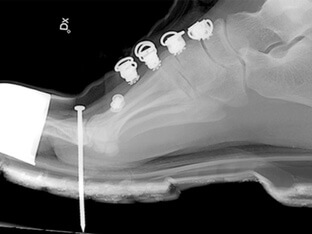
The best way to sum it up is the above photo.

This unlucky gent stuck a nail through his shoe. He was in agony. Off in the ambulance he went, straight to hospital. First thing they did was get him an X-Ray. Now this view doesn’t look too good, but from the top they found something interesting…the nail had gone straight between his toes – not through his foot!!

Pain is an unpleasant sensory and emotional experience, controlled by the brain. If your brain deems something to be harmful (whether it actually is or not), it provides a pain response to remove you from perceived “harm”.

Pain isn’t a life sentence. If you are in pain, understanding this is the first step in changing your pain. To discuss how to manage and help your pain, let the Praxis team help you.

Give us a call today on (07) 3102 3337 or book online 

Till next time, PREVENT | PREPARE | PERFORM

Team Praxis

Reference:

IASP. (14/12/17). International Association for the Study of Pain. Pain Terms: A Current List with Definitions and Notes on Usage.

FACT OR FICTION: Is running bad for your knees

FACT OR FICTION: Is running bad for your knees

We at Praxis think that patient education is the cornerstone of good physiotherapy. We particularly enjoy discussing people’s understanding of their injuries or the beliefs around certain activities. As such we are starting “Fact or Fiction Friday’s” in which we tackle some misconceptions that may negatively affect people’s rehab or willingness to participate. To get us off and running (love a pun) let’s start with:

QUESTION: Recreational running will wear out your knees (quicker than not running)

ANSWER: FICTION

Running appears not to increase risk of osteoarthritis in knees unless you are a competitive long distance runner. Even then, you are only slightly above the average for non-runners but enjoy the myriad of other benefits that exercise brings.

Check out our previous post on this here. If you are a runner or have knee pain, book in with us so we can assess you and get you back to what you love doing. Call (07) 3102 3337 or book online 

#running #arthritis #osteoarthritis #kneereplacement #preventprepareperform #kneepain #sportsinjuries #runninginjury #knee #praxisphysio #kneephysio #kneearthritis #endurancerunning

Pilates: Mat vs Reformer Pilates (Part 2 of 3)

Pilates: Mat vs Reformer Pilates (Part 2 of 3)

In part one, we unearthed that pilates has a role to play in reducing the severity of chronic lower back pain. In part two, we tackle a common question from our patients and delve further into the research to see if there is a difference between mat and reformer pilates.

SUMMARY:

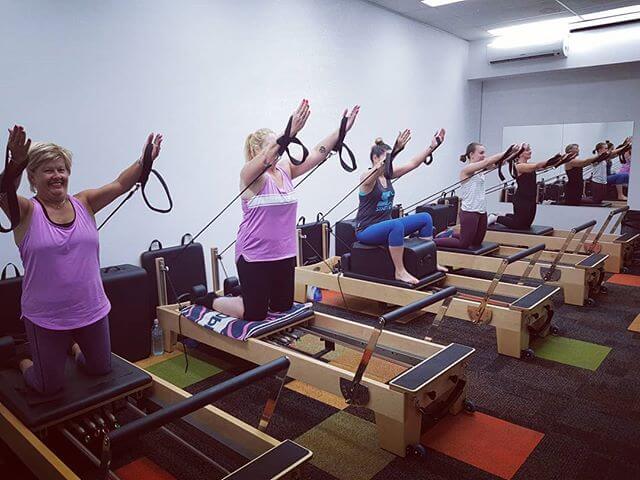
  • A reformer is a large piece of pilates equipment that utilises a spring mechanism to apply load in various positions and degrees of loading from gravity.
  • Both forms of exercise are better than the ‘wait and see’ or pharmacological approach with respect to chronic lower back pain
  • The use of reformers may provide a larger stimuli to the sensory system which facilitates proper performance due to better stabilisation
  • Pilates promotes the restoration of the function of muscles involved in lumbopelvic stabilisation, that is, transversus abdominis, multifidus, diaphragm and pelvic floor muscles (the “core”)
  • Reformer pilates provides more options for strengthening, ideal for those recovering from injury, pregnancy or surgery


As a general rule, the aim of pilates is to restore or sustain the motor control of the lumbar spine and proper body posture. Joseph Pilates (the founder of pilates) believed beginning exercise in the horizontal plane was important to relieve the stress and strain on the joints, and to align the body before adding additional gravitational forces while standing, sitting or kneeling.

Both mat and reformer are popular types of pilates which both focus on strengthening. Mat pilates, as its names suggests is a floor based method that tends to use bodyweight as the chief form of resistance.

Reformer, is the most popular equipment of Pilates. The design of Reformer utilises a spring mechanism that the person works to control while moving in various planes (Bulguroglu et al 2017). Reformer pilates allows more exercises compared to a mat and it provides the option of performing exercises numerous body positions – from your back, side, stomach and being seated — and also on your feet or knees.

COMPARE THE PAIR

Not a great deal of research has been conducted on differentiating the two forms of pilates. What studies do exist tend poorly define what equipment was used or whether individual tailoring of the sessions occurred.

Luz et al compared the effectiveness of Pilates mat and equipment-based Pilates exercises (with the use of Reformer) in a group of 86 individuals with chronic lower back pain. The 6-week routine included individual, 1-hour sessions performed twice a week and supervised by a Pilates-experienced physical therapist. The outcome measures were: pain intensity, disability, global perceived effect, patient’s specific disability and fear of movement, known as kinesiophobia (Luz et al 2014). The assessment was recorded after 6-week intervention and 6 months. A significant difference was noted in both groups after a 6-week programme in all of the areas evaluated. After 6 months however, a significant difference was found in disability, specific disability and kinesiophobia in favour of equipment-based Pilates exercises (Luz et al 2014; Eilks et al 2019).


In the study by Cruz-Diaz et al, the influence of Pilates mat exercises and equipment-based Pilates exercises (with reformer) on pain, disability, kinesiophobia and activation of transversus abdominis (expressed as a change in muscle thickness and assessed by real-time ultrasound examination) was assessed. The trial involved 98 patients with chronic lower back pan (CLBP) allocated to three groups: Pilates mat exercises, Pilates apparatus or the control group. The programme was conducted in groups of four participants during 12 weeks with 50 min sessions (twice a week). The evaluation was carried out during intervention (6 weeks after baseline) and after 12 weeks. As with Luz et al, significant improvement were shown in both groups for all outcome measures after 6 and 12 weeks. However, in the comparison between groups, the superiority of equipment-based Pilates was noted (Cruz-Diaz et al 2017).In both studies, it was suggested that the finding may be an effect of the use of apparatus in exercises that provides larger stimuli to the sensory system, resulting in larger feedback, which facilitates proper performance due to better stabilisation (Eilks et al 2019). According to da Luz et al, this result may also be caused by a placebo effect inherent for the application of equipment. As noted earlier however, reformer pilates offers a larger scope of exercises to draw upon for those who are limited by pain, weakness or fear of movement.So there you have it. What little research there is suggests that any pilates is good for your rehabilitation or as a part of your ongoing strength program. However, it appears that reformer pilates is more effective, and allows a greater degree of variability of training.For more about what makes Praxis Pilates special, check out our website here.Join us for part 3 next week where we look at what the research suggests regarding the frequency of pilates. Is more actually better?Till next time – Praxis what you preachPrevent. Prepare. Perform

References:

  1. Eliks, M., Zgorzalewicz-Stachowiak, M., & Zeńczak-Praga, K. (2019). Application of Pilates-based exercises in the treatment of chronic non-specific low back pain: state of the art. Postgraduate medical journal, 95(1119), 41-45.
  2. da Luz Jr, M. A., Costa, L. O. P., Fuhro, F. F., Manzoni, A. C. T., Oliveira, N. T. B., & Cabral, C. M. N. (2014). Effectiveness of mat Pilates or equipment-based Pilates exercises in patients with chronic nonspecific low back pain: a randomized controlled trial. Physical therapy, 94(5), 623-631.
  3. Bulguroglu, I., Guclu-Gunduz, A., Yazici, G., Ozkul, C., Irkec, C., Nazliel, B., & Batur-Caglayan, H. Z. (2017). The effects of Mat Pilates and Reformer Pilates in patients with Multiple Sclerosis: A randomized controlled study. NeuroRehabilitation, 41(2), 413-422.
  4. Cruz-Díaz, D., Bergamin, M., Gobbo, S., Martínez-Amat, A., & Hita-Contreras, F. (2017). Comparative effects of 12 weeks of equipment based and mat Pilates in patients with Chronic Low Back Pain on pain, function and transversus abdominis activation. A randomized controlled trial. Complementary therapies in medicine, 33, 72-77.