
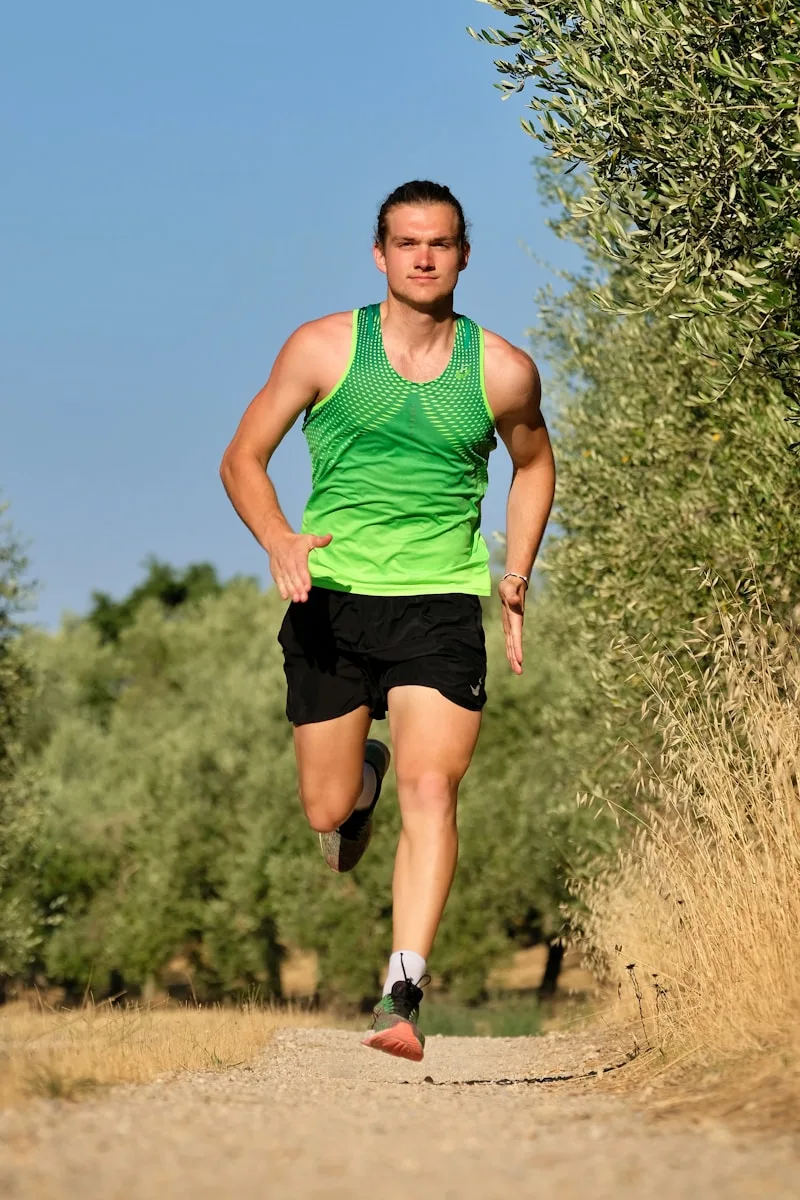
 “I wasn’t even sprinting…” It’s one of the most common stories I hear in the clinic. “I pushed off to chase the football” “I accelerated after my dog.” “I was only halfway through my run.” “It felt like someone kicked me in the calf.” The diagnosis is usually the same: a calf strain.
In sporting circles, particularly AFL, this injury has become so common that it has earned its own nickname: “Old Man Calf.” The term is tongue in cheek, but the injury certainly isn’t. Calf strains are one of the most frustrating soft-tissue injuries affecting middle-aged athletes and recreational runners. They also have a well documented habit of recurring when they aren’t managed properly.
As someone who treats these injuries regularly, and who has experienced a few myself, I know how debilitating and frustrating they can be. The encouraging part is that they’re also one of the more preventable injuries once you understand why they happen.
Why does it happen?
Age itself isn’t really the problem. What ageing does is create a perfect storm of small physiological changes that gradually chip away at the calf’s ability to tolerate high speed loading.
These changes include a reduction in muscle mass, known as sarcopenia, driven largely by the progressive loss of motor neurons and the muscle fibres they supply (Larsson et al., 2019; Nishikawa et al., 2021). Achilles tendon stiffness also appears to decline with age: research using ultrasound and biofeedback found that older adults produced up to 44% less tendon stiffness than younger adults at matched levels of muscle activation, altering how efficiently force transfers from muscle to bone during push-off (Gray et al., 2024). Interestingly, when load rather than effort is matched, some studies find no real difference in tendon stiffness between younger and older adults, suggesting a good portion of this “stiffness loss” is really a downstream effect of age-related strength loss rather than the tendon tissue itself deteriorating (Jakubowski et al., 2024). Either way, the practical implication is the same: rebuilding strength is central to rebuilding tendon function. Alongside these structural changes, recovery between training sessions slows, maximal strength and power decline, and most people simply stop exposing their calves to genuine sprinting on a regular basis.
None of these changes is dramatic on its own. Together, though, they mean the calf has less “reserve capacity” available when a sudden, explosive movement is demanded of it. That’s why so many people tear a calf doing something they’ve done hundreds of times before without issue.
Why AFL players seem particularly vulnerable
If you’ve watched AFL over the past decade, you’ve probably heard the commentary: “another calf injury,” with veteran players seeming especially susceptible. This isn’t coincidence.
Older AFL players typically retain excellent aerobic fitness and game awareness, but they’re still required to produce repeated maximal accelerations, decelerations and changes of direction, and these explosive actions place enormous force through the calf complex. Data from the AFL’s Soft Tissue Injury Registry back this up. An early analysis of muscle strains across the competition found that age was an independent risk factor for calf strains even after adjusting for injury history, while it wasn’t a risk factor for quadriceps strains, suggesting there’s something specific about how the calf tolerates ageing under repeated high-speed loading (Orchard, 2001). A later 23-year cohort of more than 3,600 muscle strains across the AFL confirmed the pattern, with each additional year of age increasing the odds of a calf strain by around 60% (Orchard et al., 2020). Older players who do sustain a calf strain also tend to take longer to recover (Gray et al., 2025), and a history of calf strain combined with older age substantially raises the risk of a further injury within the following two seasons (Green et al., 2020).
Elite sport doesn’t create this vulnerability; it simply exposes it more publicly.
Recreational runners aren’t immune
You don’t need to play AFL to be at risk. Many of the calf tears seen in clinic occur in park runners, masters athletes, weekend footballers, tennis and pickleball players, golfers walking steep courses, and parents chasing kids around the backyard. Pickleball in particular has seen a sharp rise in soft tissue injuries as participation among older adults has grown, with calf strains featuring among the most commonly recorded injuries at one US orthopaedic centre (Herzberg et al., 2025).
The common thread in all these cases is an athlete who remains active, but who isn’t regularly exposing their calves to high-speed loading. Your cardiovascular fitness might still be excellent. Your calf’s capacity to absorb a sudden sprint or lunge may not be.
Which muscle actually tears?
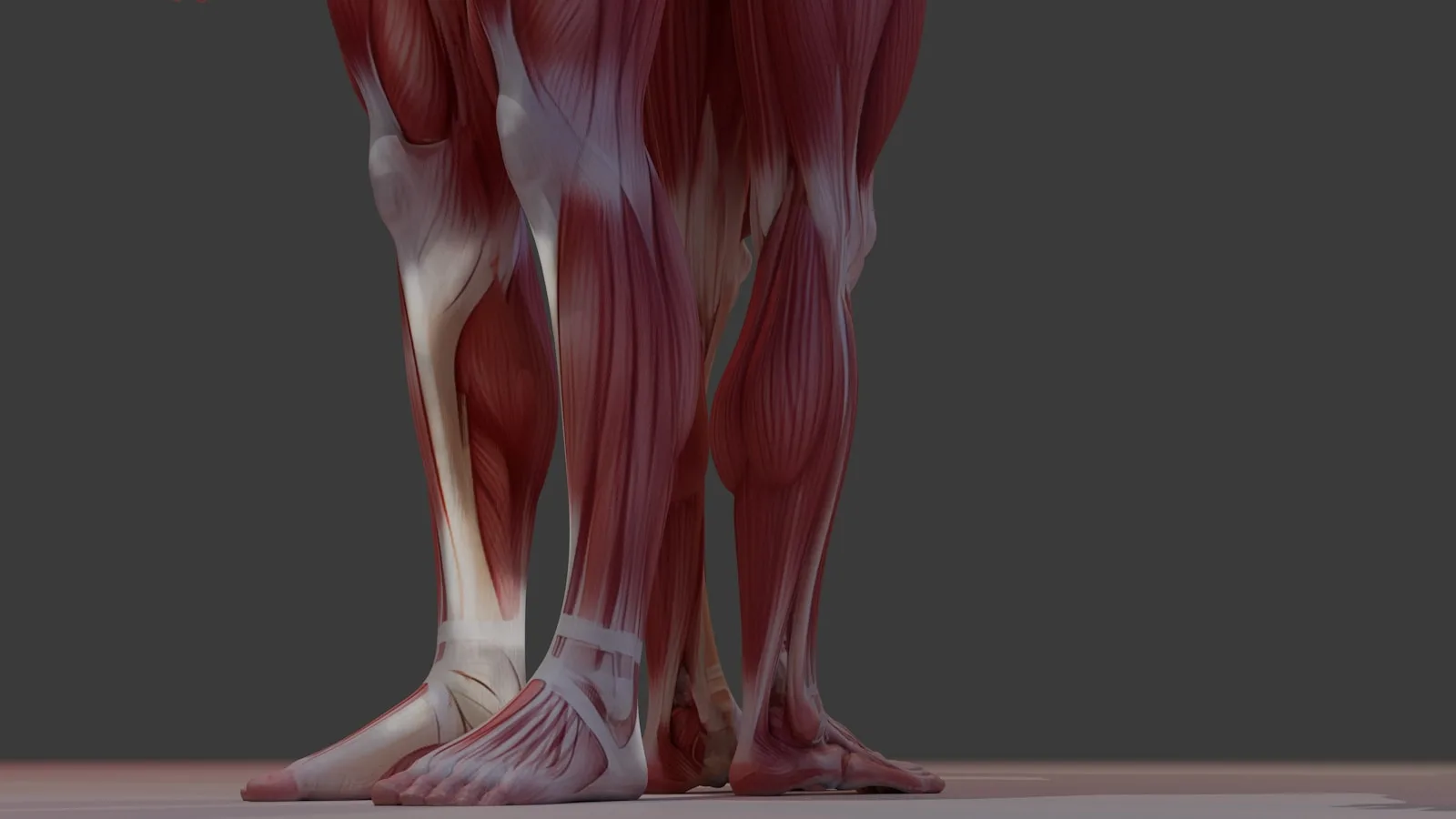 Most people simply say they’ve “done their calf,” but several distinct structures can be involved, and it’s worth knowing the difference.
Gastrocnemius is the larger, more superficial of the two major calf muscles. It’s typically injured during explosive acceleration, jumping or sprinting, and pain is often felt high in the calf and occurs suddenly. In a 10-year cohort of elite AFL players, gastrocnemius injuries most commonly affected the medial head (78% of cases), with acceleration being the single most common mechanism of injury (Gray et al., 2025).
Soleus sits deeper and functions more as an endurance muscle. It’s commonly injured during running or prolonged loading, and pain is usually felt lower in the calf, often starting as tightness before becoming more obviously painful. In the same injury registry, soleus injuries were actually more prevalent overall than gastrocnemius injuries, accounting for around 85% of all calf strains in elite AFL players, and were far more likely to recur (Green et al., 2019). Because soleus symptoms tend to develop more gradually, they’re often under-recognised in older runners until the injury is well established.
Why do calf tears keep coming back?
This is probably the biggest source of frustration for patients. Many people feel “pretty good” after three to four weeks: they can walk, they can cycle, and they might even jog comfortably. Unfortunately, healing tissue isn’t the same as fully restored tissue.
The evidence on recurrence is sobering. In elite AFL players, a prior calf strain increased the risk of a further injury several-fold, and older age independently increased that risk further still (Green et al., 2020). A separate analysis of over 3,600 muscle strains across 23 AFL seasons found that the risk of recurrence stays elevated for around 15 weeks after return to play, and that a recent history of the same injury was, by a wide margin, the strongest predictor of injuring it again (Orchard et al., 2020). Put simply, unless strength, endurance, plyometric capacity and sprint exposure are specifically rebuilt, the calf returns to sport with reduced capacity, and eventually something gives again.
Can you prevent “Old Man Calf”?
The encouraging answer is yes. While age can’t be changed, capacity can.
Heavy calf strength. Strong calves tolerate greater force before they fail. Heavy seated and standing calf raises should be part of long-term training, not something reserved for rehab after an injury has already occurred. Eccentric loading in particular has been shown to drive meaningful adaptations in tendon properties and may be especially well suited to older adults, since it can achieve those adaptations at comparatively lower relative demands than other contraction types (Quinlan et al., 2019).
Plyometric training. Skipping, hopping and bounding, performed in small, consistent doses, help the calf improve its ability to store and release elastic energy efficiently.
 Sprint exposure. This is perhaps the most overlooked factor of all. Many recreational runners train at a single, moderate pace and then, once every few months, need to sprint for a bus, a ball or a toddler heading for the road. That’s the equivalent of expecting a shoulder to throw a ball at full pace without ever having practised it. Regular controlled strides, accelerations and genuinely faster running help maintain the calf’s resilience to sudden demand.
Consistent training volume. Sharp spikes in training load remain one of the most consistently identified injury risk factors. In professional footballers, a week of unusually high external workload, particularly involving high-intensity accelerations and decelerations, regularly preceded calf strain injuries, and injured players were, on average, older than their uninjured teammates (Soler et al., 2024). The calf tends to prefer gradual, planned increases over heroic weekends bolted onto weeks of inactivity.
Recovery. Sleep, nutrition and ongoing strength training all matter more after 40, simply because recovery isn’t as forgiving as it once was.
Don’t ignore persistent calf tightness
One of the most common mistakes I see is assuming every tight calf just needs stretching. Persistent tightness can actually represent residual weakness, reduced tendon capacity, neural fatigue, or an incompletely healed muscle injury. Stretching alone rarely resolves any of these underlying issues.
A proper assessment should identify why the calf feels tight in the first place. Often, the answer is that it needs to get stronger, not longer.
When should you seek help?
It’s worth having the injury assessed if you experience sudden pain with a popping sensation, difficulty pushing up onto your toes, swelling or bruising, repeated calf strains, or calf tightness that never quite seems to resolve.
A detailed examination can usually determine which structure has been injured, whether imaging is required, and, most importantly, what needs to be rebuilt before you return to running or sport.
The bottom line
“Old Man Calf” might sound like a joke, but it reflects a genuine physiological phenomenon. As we age, our calves gradually lose reserve capacity, and without ongoing strength, power and speed exposure, they’re regularly asked to perform tasks they simply haven’t been prepared for.
Fortunately, this isn’t inevitable. With the right combination of strength training, progressive running, plyometrics and intelligent rehabilitation, many athletes continue running, competing and enjoying sport well into their 50s, 60s and beyond. Age may increase the risk, but it doesn’t have to define your future. If you have struggled (like I have) with calf tears derailing your activity participation, or you fear the return to running stage, book in with one of our physios today to get you back to your best!
Until next time, Praxis What You Preach
📍 Clinics in Teneriffe, Buranda, and Carseldine
💪 Trusted by athletes. Backed by evidence. Here for everyone.
References
- Larsson L, Degens H, Li M, et al. Sarcopenia: Aging-Related Loss of Muscle Mass and Function. Physiol Rev. 2019;99(1):427-511. DOI
- Nishikawa H, Fukunishi S, Asai A, et al. Pathophysiology and mechanisms of primary sarcopenia (Review). Int J Mol Med. 2021;48(2). DOI
- Gray AJ, Krupenevich RL, Batsis JA, Sawicki GS, Franz JR. Reduced Achilles tendon stiffness in aging associates with higher metabolic cost of walking. J Appl Physiol. 2024;137(6):1541-1548. DOI
- Jakubowski KL, Ludvig D, Lee SSM, Perreault EJ. Aging Does Not Alter Ankle, Muscle, and Tendon Stiffness at Low Loads Relevant to Stance. Ann Biomed Eng. 2024;52(9):2556-2568. DOI
- Orchard JW. Intrinsic and extrinsic risk factors for muscle strains in Australian football. Am J Sports Med. 2001;29(3):300-303. DOI
- Orchard JW, Chaker Jomaa M, Orchard JJ, et al. Fifteen-week window for recurrent muscle strains in football. Br J Sports Med. 2020;54(18):1103-1107. DOI
- Gray C, Pizzari T, Murphy MC, et al. Gastrocnemius Muscle Strain Injury Characteristics in Elite Male Australian Football Players: A 10-Year Longitudinal Cohort Study. J Orthop Sports Phys Ther. 2025;55(10):681-688. DOI
- Green B, Lin M, McClelland JA, Semciw AI, Schache AG, Rotstein AH, Cook J, Pizzari T. Return to Play and Recurrence After Calf Muscle Strain Injuries in Elite Australian Football Players. Am J Sports Med. 2020;48(13):3306-3315. DOI
- Herzberg SD, Bowman EN, Hill KL. Evaluation of Pickleball-Related Injuries at a Single Institution From 2017 to 2022. Orthop J Sports Med. 2025;13(2). DOI
- Green B, Lin M, Schache AG, McClelland JA, Semciw AI, Rotstein A, Cook J, Pizzari T. Calf muscle strain injuries in elite Australian Football players: A descriptive epidemiological evaluation. Scand J Med Sci Sports. 2020;30(1):174-184. DOI
- Quinlan JI, Narici MV, Reeves ND, Franchi MV. Tendon Adaptations to Eccentric Exercise and the Implications for Older Adults. J Funct Morphol Kinesiol. 2019;4(3):60. DOI
- Soler A, Agulló F, Hernández-Dávó J, Raya-González J, Del Coso J, González-Ródenas J, Moreno-Pérez V. Influence of the External Workload on Calf Muscle Strain Injuries in Professional Football Players: A Pilot Study. Sports Health. 2024;17(1):175-182. DOI