The Benefits of Remedial Massage

The Benefits of Remedial Massage

Remedial Massage — Indulgence or Evidence-Based Care?

We all enjoy the occasional indulgence — a moment to switch off, slow down, or reward ourselves after a busy week. For many people, massage falls into this category. It is often seen as a “luxury” rather than a legitimate health intervention.

The good news is that, unlike many indulgences, massage is associated with a range of reported health benefits. In fact, as wellness interventions go, it is relatively affordable, low risk, and widely accessible. But as always, it’s worth looking beyond the feel-good factor and asking — what does the evidence actually show?

Massage has long been a popular treatment among athletes, coaches, and sports physiotherapists. It is frequently used to assist recovery, manage muscle soreness, and promote relaxation. However, despite its widespread use, the scientific evidence remains mixed. While many people report meaningful benefits, research suggests that the physiological effects of massage are complex and not always consistent across studies (Arroyo-Morales et al., 2011).

What actually happens during a massage?

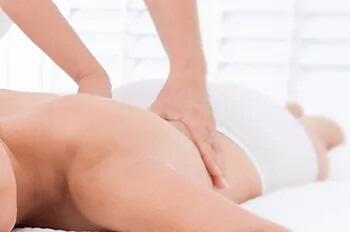
Massage therapy involves applying manual pressure, kneading, and movement to the muscles and surrounding soft tissues — including tendons, ligaments, and fascia. It is a form of manual therapy that aims to influence both local tissue behaviour and the broader nervous system.

Weerapong and colleagues (2005) proposed four key mechanisms through which massage may affect the body. Three of the most relevant are outlined below.

1. Biomechanical effects

Mechanical pressure from massage can influence the physical properties of muscle and surrounding tissues. Research suggests that massage may:

  • Improve muscle compliance (flexibility of the muscle)

  • Reduce passive muscle stiffness

  • Reduce active muscle tension

  • Increase joint range of motion

  • Enhance local blood flow through increased arteriolar pressure

  • Raise muscle temperature via friction and movement

These effects help explain why people often feel “looser,” warmer, and less stiff after a treatment (Hopper et al., 2004).

2. Neurological effects

Massage does not only act on muscles — it also influences the nervous system.

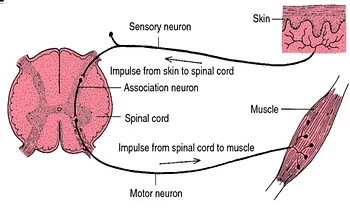
One way this occurs is through changes in neural excitability, which can be measured using the Hoffman reflex (H-reflex). This reflex provides insight into how responsive the spinal motor neurons are — in simple terms, how “switched on” a muscle is.

A study on calf massage (Morelli et al., 1990) demonstrated that massage could reduce spinal motor neuron excitability. Practically, this suggests massage may promote muscle relaxation in a similar way to gentle stretching or sustained pressure techniques.

This neurological effect may help explain why massage can reduce perceived muscle tightness, improve comfort, and support recovery even when structural tissue changes are minimal.
3. Physiological effects

Massage has also been shown to influence the autonomic nervous system — the system that regulates stress and relaxation in the body.

Studies demonstrate changes in:

  • Heart rate

  • Blood pressure

  • Heart rate variability (a marker of stress regulation)

  • Cortisol levels (a stress hormone)

Together, these changes reflect an increase in parasympathetic (rest-and-digest) activity, creating a genuine relaxation response rather than just a subjective feeling of calm.

4. Psychological effects

Beyond physical changes, massage can have meaningful psychological benefits.

Research has shown that massage can reduce anxiety and improve mood state. In sporting contexts, pre-performance massage has even been associated with lower performance anxiety, helping athletes feel calmer and more focused before competition (Arroyo-Morales et al., 2011). 
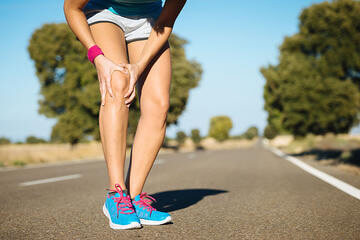


Is running bad for your knees?

Is running bad for your knees?

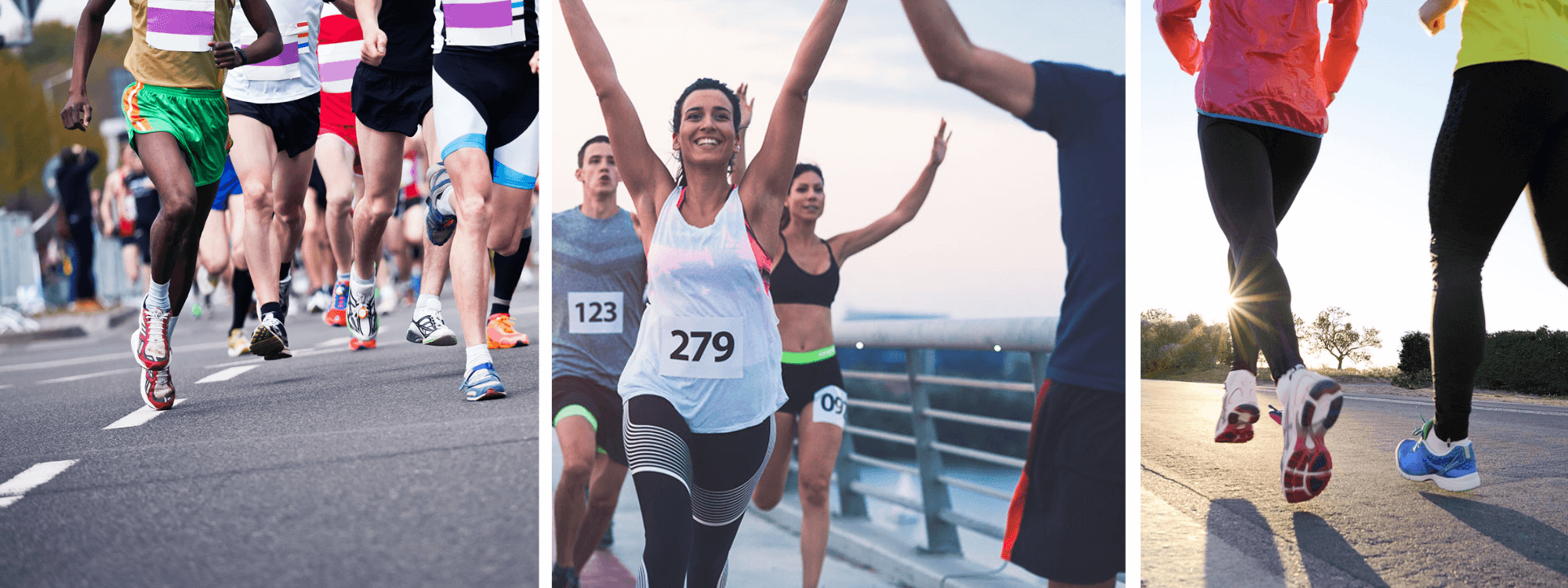
Running. Probably one of the most maligned exercises when it comes to knees and overuse injuries. The thought that running ‘wears’ out your knees and causes osteoarthritis (a chronic disease often associated with joint pain and stiffness, reduced mobility and reduced quality of life) is one of the most common comments I hear as a physiotherapist – typically by non-runners. But do we have it right? Is running actually bad for your knees?

I recently attended the University of Queensland Sports Masters presentation day. The keynote speaker was a Dr Jean-Francois Esculier, a Postdoctoral Fellow at the University of British Columbia on the topics of running and knee osteoarthritis. Originally trained as a physiotherapist, Dr Esculier gave us an excellent overview of his latest research his take on whether or not running is detrimental to knee health.

First, there was an acknowledgement that echoed the sentiments in the opening paragraph. A study in which Dr Esculier undertook attempted to ascertain the perception about running and the knee joint health among the public and health care professionals. The results suggested that many non-runners perceived running as detrimental to knee health. Understandably, with no clear guidelines, health care professionals displayed high rates of uncertainty regarding running as a risk factor to develop knee osteoarthritis (KOA), and about the appropriateness of running with pre-existing KOA [1].

Mid Potion Achilles Tendinopathy Location

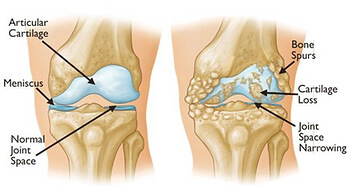
Osteoarthritis often results in cartilage loss, in bone rubbing on bone, which can cause inflammation, pain, stiffness, reduced mobility and reduced quality of life [7].

The paucity of clear training parameters for runners also has a knock on effect with a staggering 75% of runners report being injured whilst running each year with the knee being the most common region of complaint [2]. From my experience as a clinician, the factor that is most often associated with an injury are training errors. Too much too quick. Boom bust. No physical preparation. No listening to your body or allowing adequate recovery time. No periodisation or plan – just run and run.

The remainder of the talk that covered many interesting relatable topics (that will likely be areas for future blogs) but the information that most interested me and should answer the question as to whether running is bad for your knees was the following:

Cartilage change with running:

With the improvements in MRI scanning, more papers are looking at the cartilage volume of knees immediately after a long distance run. According to current evidence [3], cartilage may exhibit short-term decreases in thickness, volume and cartilage water flow (T2 relaxation time) secondary to temporary loss of fluid following repeated compressions associated with running. However, cartilage size tends to return to baseline within hours suggesting that cartilage may well tolerate mechanical loading sustained during running and adapt to repeated exposure.

The response of cartilage to longitudinal load is exactly what Van Ginckel et al [4] investigated. After providing a 10 week “Start To Run” program to novice runners, the reserachers looked at the glycosaminoglycan (GAG) content before and after the running intervention and compared to sedentary controls, who did no running. For those of you (like me) who had no idea what glycosaminoglycan / GAG content is, it is essentially a surrogate marker for cartilage quality (specifically, GAG is an important structural matrix compound in regulating the cartilage tissue’s endosmotic swelling pressure and thus, the tissue’s compressive strength).

The results suggested that a gradually built up running scheme appears to positively effect GAG content, and thus cartilage quality. In fact, running appears to be a chondroprotective effect on the knee when compared to a sedentary lifestyle in a female asymptomatic subjects. The author’s went onto say that running schemes like this might be considered a valuable tool in osteoarthritis prevention strategies [4].

Osteoarthritis (OA) rates in competitive vs recreational vs non-runners:

The body’s ability to adapt to considered and appropriate load is likely explanation as to why when we look at the rates of lower limb osteoarthritis (OA) across the population, we find some interesting results. A systematic review [5] of the literature looked at the association of recreational and competitive running with hip and knee OA. The overall prevalence of hip and knee OA was 13.3% in competitive runners, 3.5% in recreational runners, and 10.2% in controls. Exposure to running of less than 15 years was associated with a lower association with hip and/or knee OA compared with non-runners.

Recreational runners had a lower occurrence of OA compared with competitive runners and controls. These results indicated that a more sedentary lifestyle or long exposure to high-volume and/or high-intensity running are both associated with hip and/or knee OA. However, it was not possible to determine whether these associations were causative or confounded by other risk factors, such as previous injury [5].

SUMMARY

Running appears not to cause osteoarthritis in your knees unless you are a competitive long distance runner. Even then, you are only slightly above the average for non-runners but enjoy the myriad of other benefits that exercise brings. Further, increased mileage in recreational runners appears to be actually protective for your knees and reduces your risk of needing a knee replacement [6]. Caution however must be taken to monitor detailed training parameters such as frequency, speed and distance, so that an optimal dosage for knee joint health tailored to the individual patients with knee osteoarthritis.

So the next time someone tells you that you shouldn’t be running because you’ll get OA, or if your health expert recommends to stop all activity because you have been diagnosed with mild / moderate osteoarthritis of the knee, we can help! As always, we at Praxis are more than happy to help you navigate your way back to performing – whatever that may look like! Give us a call (07) 3102 3337 or book online www.praxisphysio.com.au today

Until next time, Praxis What You Preach

There is no need to accept knee pain as ‘normal’. Call us now on (07) 3102 3337 or book online to have one of our physios develop a plan to reduce your pain and restore your function!

To read more about how running can help your knees (that’s right – running!) check out our related posts on running written by our published principal physio, Stephen.

Team Praxis,

PREVENT | PREPARE | PERFORM