
If you spend any time on training social media, you’ll have seen the claim: “knees over toes is safe, the knee can never break.” It’s usually paired with a deep split squat or a decline-board sissy squat, and the logic sounds airtight. After all, the knee is a hinge. Hinges don’t fail just because they bend further. So let the knee travel forward and stop worrying about it.
The trouble is, that claim answers a question nobody with a real knee problem is actually asking. Nobody’s knee snaps off because the shin moved past the toes. The real question for us physios is what happens to the loading pattern, specifically at the knee, the hip, and the ankle, when you deliberately increase forward knee travel. The follow-up question is whether that redistribution is a good idea for the person in front of you. Sometimes it clearly is. Sometimes, for a specific joint or a specific stage of tissue health, it isn’t. Knees over toes (KOT) training is a useful tool, not a universal prescription, and the difference comes down to context.
What Actually Changes When the Knee Travels Forward
Forward knee travel is really just a way of increasing knee flexion angle for a given squat depth. Across the closed chain squat literature, patellofemoral joint compressive force rises as knee flexion increases, climbing through the range and peaking near maximum flexion [1]. That’s not a reason to avoid knee flexion though. The same body of work shows a well performed squat is not inherently injurious to a healthy knee [1]. However, it does mean KOT-style loading (decline boards, elevated heels, ATG-style split squats) is, mechanically, a deliberate way of asking the patellofemoral joint and quadriceps to do more work. It’s also asking other structures to do comparatively less.
I see the same pattern in my own postgraduate research. My Masters thesis compared a single leg squat performed flat versus on a 20° decline board. Mechanically, this is a mild KOT-style setup, since tilting the ankle into more dorsiflexion lets the knee travel further forward for the same depth. I’ve recently gone back through that dataset with more rigorous statistics: multivariate testing, a false-discovery rate corrected sweep of the whole kinetic chain, and continuous waveform analysis rather than single angle snapshots (unpublished). This is in preparation for peer review. The consistent finding was that the flat squat demanded more hip adduction and hip external rotation control than the decline (KOT-style) squat did. In other words, moving the load pattern toward the knee moved it away from the hip. No force plate data was collected, so none of this speaks to joint torque. It only speaks to the angles and ranges the body chose to use. But the direction of the effect lines up with what the broader literature shows: change where the knee sits, and you change who does the work.
When That Shift Is a Good Thing: Patellar Tendinopathy
This is exactly why KOT-style loading has a legitimate, evidence-backed place in rehab for conditions like patellar tendinopathy (Jumper’s Knee). The eccentric decline squat, standing on a 25° decline board and loading into knee flexion, is a validated treatment for chronic patellar tendinopathy. In a randomised trial of elite volleyball players, the decline squat protocol produced a greater likelihood of clinically meaningful improvement at 12 months than a standard step-based eccentric protocol [2]. Deliberately increasing knee flexion and patellar tendon load, in this context, is the treatment, not the injury mechanism. The caveat is dosage: this works because it’s a graded, monitored program matched to how reactive the tendon currently is, not a blanket instruction to load into deep knee flexion regardless of symptoms.
When That Shift Is a Problem: PFJ Osteoarthritis and Growing Joints
Patellofemoral joint pain and osteoarthritis is common, and it isn’t confined to the elderly. In a cohort of adults with chronic patellofemoral pain, isolated or combined patellofemoral OA was the most frequent radiographic pattern. It was still common in people under 50 [3]. If patellofemoral compressive force climbs with knee flexion angle [1], then someone with an irritable or osteoarthritic patellofemoral joint is exactly who shouldn’t be defaulted into maximal forward knee travel as a training rule. That’s not because the joint will “break,” but because you’re deliberately loading the structure that’s already struggling.
The same logic applies, for different reasons, to adolescent athletes with an active tibial tubercle or inferior patellar pole apophysis: Osgood-Schlatter disease and Sinding-Larsen-Johansson syndrome. Both are traction injuries at the attachment of the extensor mechanism during a growth spurt, driven by repetitive quadriceps loading at a site of transient bony weakness [5]. These are often dismissed as a benign rite of passage that resolves with growth. A large national cohort of adults with a history of Osgood-Schlatter found otherwise: significantly worse long-term knee health than the general population, and roughly seventy times the odds of later patellar tendinopathy [4]. That’s not an argument for wrapping every teenager in cotton wool, but it is an argument against treating “deep knee flexion is always fine” as a rule that applies equally to a mature knee and a growth plate under active traction stress.
The Other End of the Chain: What Gets Less Work When the Knee Gets More
Hip muscle control, particularly the abductors and external rotators, plays a well-documented role in patellofemoral and general knee joint health, and impaired hip control has been linked to patellofemoral pain, ACL injury, and iliotibial band syndrome [6]. In my own data, the squat variation that most reduced knee flexion demand (the flat squat) was also the one that most increased hip adduction and external rotation demand, and vice versa for the decline, KOT-style squat. If someone’s hip abductor and external rotation strength is already a known weak point, a common finding on clinical assessment, then consistently choosing the technique that asks least of the hip doesn’t build the capacity that protects them in the positions sport actually demands: cutting, landing, and decelerating, which load the hip in the frontal and transverse planes far more than a controlled, sagittal-plane forward-knee-travel squat does.
The Variable That Gets Missed: Ankle Range
My thesis’s central finding was that restricting ankle range doesn’t stop someone reaching squat depth. It just moves the job elsewhere in the chain, typically to the hip and knee. That’s been shown experimentally, too: artificially limiting ankle dorsiflexion during a double leg squat produced less knee flexion, more knee valgus, greater medial knee displacement, and altered quadriceps and calf activation [7], a pattern that looks a lot like the “bad” knee position many KOT discussions are trying to train away, except the driver was the ankle, not a lack of knee travel. Separately, reduced ankle dorsiflexion range has been identified as a performance factor associated with patellar tendinopathy in volleyball players, plausibly because a stiff ankle can’t share the job of absorbing landing load the way it’s meant to [8]. Patellar tendon load is a genuine, common concern in lower-limb dominant, high jump-landing-deceleration sports like volleyball and AFL [9], That makes ankle range something worth assessing alongside knee position, not a variable to ignore because the knee is the more visible part of the movement.
So, Is Knees Over Toes Okay?
For most healthy athletes, yes. It’s a legitimate way to load the quadriceps and patellar tendon, and in the right dose it’s genuinely therapeutic. But “the knee can’t break past the toes, so it’s always safe” is biomechanically incomplete. It doesn’t remove load, it relocates it: toward the patellofemoral joint and away from the hip. Where that relocated load lands matters when you’re dealing with an irritable patellofemoral joint, a growth plate under active traction stress, a hip that assessment has already flagged as a weak link, or an ankle that doesn’t have the range to share the job in the first place.
The practical takeaway isn’t “knees over toes is dangerous” or “knees over toes is mandatory.” It’s that the decision belongs at the level of the individual athlete: their patellofemoral symptoms, growth-plate stage, hip strength, and ankle range. It’s not a rule that’s supposed to apply to everyone in the gym at once. Context is king.
Related Articles

The Single Leg Squat: What My Masters Data Actually Shows
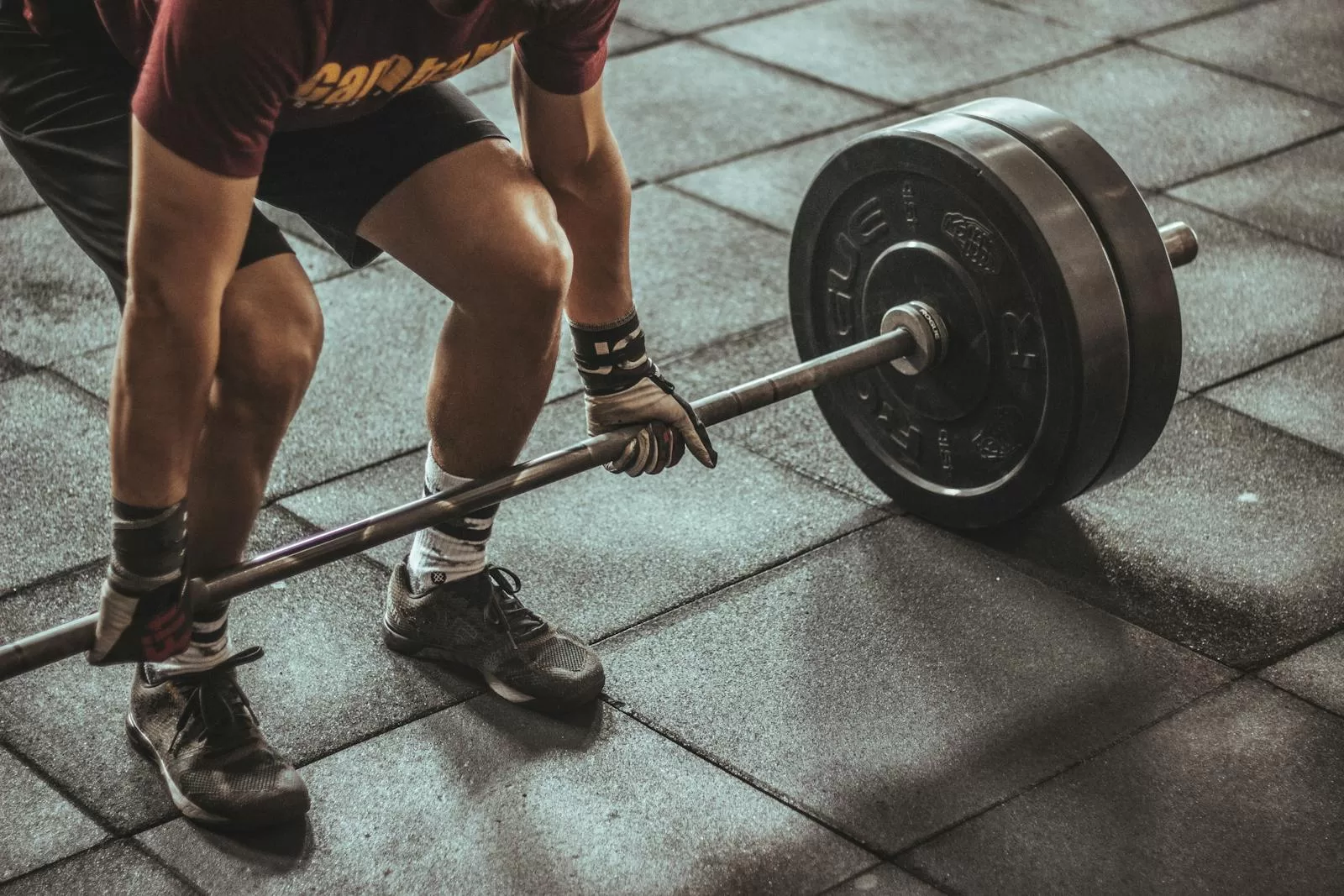
Split Squat vs Squat vs Deadlift: How to tailor your lower body training
Unilateral vs Bilateral Training, Part 2: Performance outcomes
References
- Escamilla RF. Knee biomechanics of the dynamic squat exercise. Med Sci Sports Exerc. 2001;33(1):127-141. https://doi.org/10.1097/00005768-200101000-00020
- Young MA, Cook JL, Purdam CR, Kiss ZS, Alfredson H. Eccentric decline squat protocol offers superior results at 12 months compared with traditional eccentric protocol for patellar tendinopathy in volleyball players. Br J Sports Med. 2005;39(2):102-105. https://doi.org/10.1136/bjsm.2003.010587
- Hinman RS, Lentzos J, Vicenzino B, Crossley KM. Is patellofemoral osteoarthritis common in middle-aged people with chronic patellofemoral pain? Arthritis Care Res (Hoboken). 2014;66(8):1252-1257. https://doi.org/10.1002/acr.22274
- Krommes K, Bjerre A, Thorborg K, Nielsen MF, Hölmich P. Long-term knee health in adults with a history of adolescent Osgood-Schlatter: a national cohort study of patients in secondary care in Denmark 1977-2020. Sports Med. 2025;55(7):1769-1781. https://doi.org/10.1007/s40279-025-02214-5
- Yaya-Quezada C, Fanney L, Patel V, Taragin BH, Williams BA, Simoni P, Nguyen JC. Imaging of the pediatric knee. Semin Musculoskelet Radiol. 2024;28(4):462-476. https://doi.org/10.1055/s-0044-1786152
- Powers CM. The influence of abnormal hip mechanics on knee injury: a biomechanical perspective. J Orthop Sports Phys Ther. 2010;40(2):42-51. https://doi.org/10.2519/jospt.2010.3337
- Macrum E, Bell DR, Boling M, Lewek M, Padua D. Effect of limiting ankle-dorsiflexion range of motion on lower extremity kinematics and muscle-activation patterns during a squat. J Sport Rehabil. 2012;21(2):144-150. https://doi.org/10.1123/jsr.21.2.144
- Malliaras P, Cook JL, Kent P. Reduced ankle dorsiflexion range may increase the risk of patellar tendon injury among volleyball players. J Sci Med Sport. 2006;9(4):304-309. https://doi.org/10.1016/j.jsams.2006.03.015
- Docking SI, Rio E, Cook J, Carey D, Fortington L. Quantification of Achilles and patellar tendon structure on imaging does not enhance ability to predict self-reported symptoms beyond grey-scale ultrasound and previous history. J Sci Med Sport. 2018;22(2):145-150. https://doi.org/10.1016/j.jsams.2018.07.016