
Walk into almost any gym and you’ll hear it before you see it: “activate your glutes.” Clamshells before squats. Banded lateral walks before a run. A few minutes of glute “wake up” drills before anyone is allowed near a barbell. The idea has become gym gospel: modern life, and especially sitting at a desk all day, switches your glutes off. Unless you flick them back on with an activation ritual, they’ll simply refuse to do their job.
It’s a tidy story. It gives a name to that vague, flat, “my bum isn’t doing anything” feeling a lot of people report. And it comes with an easy fix: a few isolation exercises before you train. The trouble is, the science behind “lazy glutes” and “glute amnesia” doesn’t really hold up the way the fitness industry has run with it.
At Praxis, we see plenty of people with hip, knee, and low back pain who’ve been told their glutes are “switched off.” Almost none of them have a neurological problem. What they usually have is a strength problem, and that distinction changes everything about how you should train.
MYTH vs FACT
MYTH: Your glutes get “switched off” by sitting and need to be reactivated with specific drills before they’ll work properly.
FACT: In the vast majority of people, the glutes are neurologically intact and firing exactly when they should be. What’s usually missing isn’t activation, it’s capacity. The muscle hasn’t forgotten how to work; it simply hasn’t been loaded enough to get strong.
WHERE DID “LAZY GLUTES” COME FROM?
The term “gluteal amnesia” was popularised by spine researcher Stuart McGill. He used it to describe a pattern he observed in some low back pain patients: delayed or reduced gluteal recruitment during hip extension, with the hamstrings and lower back muscles picking up the slack instead. It was a specific observation in a specific clinical context.
Somewhere between the research lab and the gym floor, that nuanced idea got flattened into a blanket diagnosis. Everyone who sits for work supposedly has “lazy glutes,” and everyone needs to “activate” them before lifting anything heavy. It’s a great marketing hook. It’s a much shakier physiological claim. True neurological inhibition, where a muscle genuinely can’t be voluntarily recruited, is well documented after things like ACL injury or joint effusion. But there’s little evidence that healthy adults who sit for a living have gluteal muscles that are switched off in that sense. What research more consistently finds is deconditioning: a muscle that is weaker and less capable of producing force, not one that has forgotten how to contract.
WHAT DOES THE RESEARCH ACTUALLY SHOW?
This matters because the evidence base for glute strength is genuinely strong, it just points to loading, not “activation,” as the fix.
In people with patellofemoral pain (that common ache around or behind the kneecap), a 2023 systematic review and meta-analysis looked at hip abductor and lateral rotator strengthening. It produced significant improvements in pain and function compared with quadriceps-only rehab (Alammari et al., 2023). This is a pattern seen repeatedly in the knee pain literature. People with anterior knee pain tend to have measurably weaker hip abductors, and building strength, not “waking up” the muscle, is what improves their symptoms. We go into this in more depth in our guide to Anterior Knee Pain and Patellofemoral Pain Syndrome.
The same story shows up in low back pain. A 2023 cross-sectional study found that people with chronic non-specific low back pain had measurably weaker hip abductor, adductor, and extensor strength than pain-free controls (Pizol et al., 2023). Again, that’s a strength deficit, not evidence of a muscle that can’t be voluntarily recruited.
For runners, a systematic review and meta-analysis of gluteus medius function found that this muscle behaves differently in injured versus healthy runners, particularly around pelvic control during the stance phase (Semciw et al., 2016). This reinforces that capacity and control under load, developed through training, is what protects the hip and knee during repetitive impact.
Gluteal tendinopathy is a genuinely common cause of lateral hip pain, especially in perimenopausal women (something we cover in our Peri-Menopause and Injury guide). A landmark randomised trial out of Brisbane and Melbourne found that a progressive, graded strengthening program outperformed both corticosteroid injection and a “wait and see” approach for pain and global improvement at eight weeks (Mellor et al., 2018). Tendons in this region need managed load, not activation drills.
STRENGTH, NOT ACTIVATION
So why does a clamshell or a banded walk sometimes make your glutes feel like they’re “waking up”? Because low-load isolation exercises are genuinely good at producing that burning, activation sensation. But sensation isn’t the same as strength. A landmark EMG study measured gluteal muscle activity across a dozen common therapeutic exercises. Exercises like single-leg squats and step-ups produced far higher activation of the glute max and glute med than the low-load “pre-activation” drills people typically use as a warm-up (Distefano et al., 2009). In other words, the exercises people do to “switch on” their glutes are usually the least effective ones for actually building the muscle.
The uncomfortable truth is that a five-minute band circuit isn’t a substitute for progressive resistance training. Your glutes are the largest, most powerful muscle group in your body. Treating them like a fragile switch that needs flicking on, rather than a muscle that adapts to load exactly like any other, sells them short.
WHAT ACTUALLY WORKS
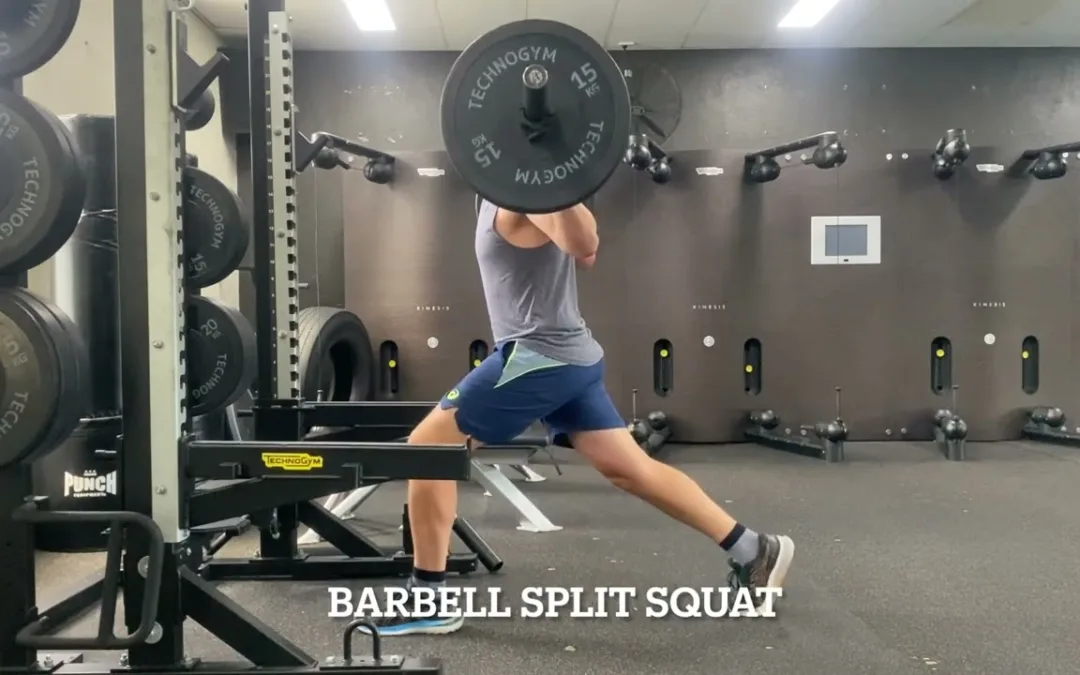
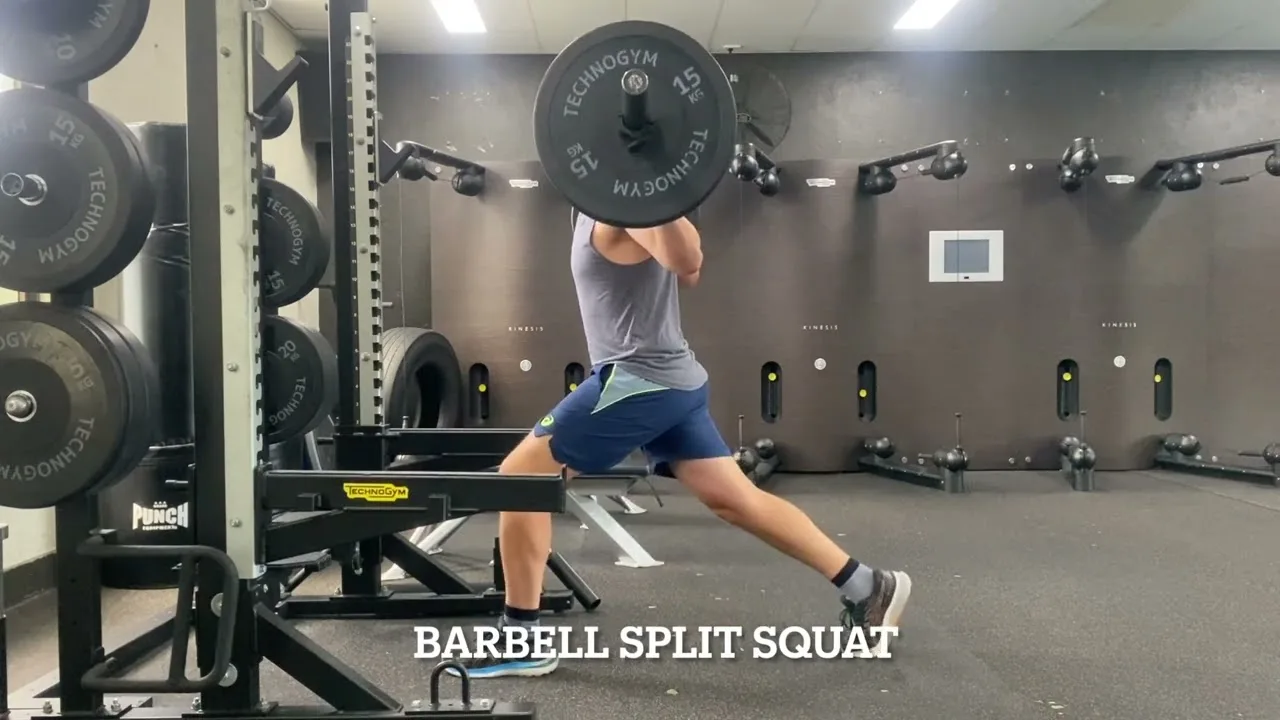
The evidence points consistently towards progressive strength training as the answer: hip thrusts, split squats, step-ups, deadlift variations, and single-leg work. These need to be loaded appropriately and progressed over weeks and months. If you’re not sure which movement pattern suits your goals or current pain, our piece on Split Squat vs Squat vs Deadlift is a good starting point. It’s built for tailoring lower body training to your needs.
On our YouTube channel (@praxisphysiotherapy), our Feet Elevated Hamstring Bridge video is a good example. It’s a hip-extension exercise that genuinely loads the glutes rather than just “switching them on.” We don’t currently have a video specifically dedicated to hip thrust or glute strength progressions. That’s something we’re planning to add, given how central this pattern is to genuine glute strength development.
The Takeaway
Your glutes almost certainly aren’t asleep, forgotten, or switched off. In the overwhelming majority of cases, what feels like “lazy glutes” is simply an undertrained muscle. It hasn’t been progressively loaded enough to build real strength and capacity. The fix isn’t a five-minute activation ritual before your workout. It’s a structured strength program that gets heavier over time. If you’re dealing with knee pain, hip pain, low back pain, or you just suspect your glutes aren’t pulling their weight, book in with the team at Praxis Physiotherapy in Teneriffe, Woolloongabba, or Carseldine. We’ll do a proper strength assessment and build a program around real, progressive loading.
Until next time, Praxis What You Preach…
📍 Clinics in Teneriffe, Woolloongabba, and Carseldine
💪 Trusted by athletes. Backed by evidence. Here for everyone.
Related Articles
Deep Gluteal Syndrome: The Buttock Pain That Mimics Sciatica
Femoroacetabular Impingement (FAI): The Groin Pain Behind Your Squat and Sitting Trouble
Sciatica: Why That Shooting Leg Pain Isn't the Life Sentence It Feels Like
References
Alammari A, Spence N, Narayan A, Karnad SD, Ottayil ZC. Effect of hip abductors and lateral rotators’ muscle strengthening on pain and functional outcome in adult patients with patellofemoral pain: A systematic review and meta-analysis. Journal of Back and Musculoskeletal Rehabilitation. 2023;36:35-60.
Distefano LJ, Blackburn JT, Marshall SW, Padua DA. Gluteal Muscle Activation during Common Therapeutic Exercises. Journal of Orthopaedic & Sports Physical Therapy. 2009;39(7):532-540.
Mellor R, Bennell K, Grimaldi A, Nicolson P, Kasza J, Hodges P, Wajswelner H, Vicenzino B. Education plus exercise versus corticosteroid injection use versus a wait and see approach on global outcome and pain from gluteal tendinopathy: prospective, single blinded, randomised clinical trial. BMJ. 2018;361:k1662.
Pizol GZ, Franco KFM, Miyamoto GC, Cabral CMN. Is there hip muscle weakness in adults with chronic non-specific low back pain? A cross-sectional study. BMC Musculoskeletal Disorders. 2023;24:790.
Semciw AI, Neate R, Pizzari T. Running related gluteus medius function in health and injury: A systematic review with meta-analysis. Journal of Electromyography and Kinesiology. 2016;30:98-110.