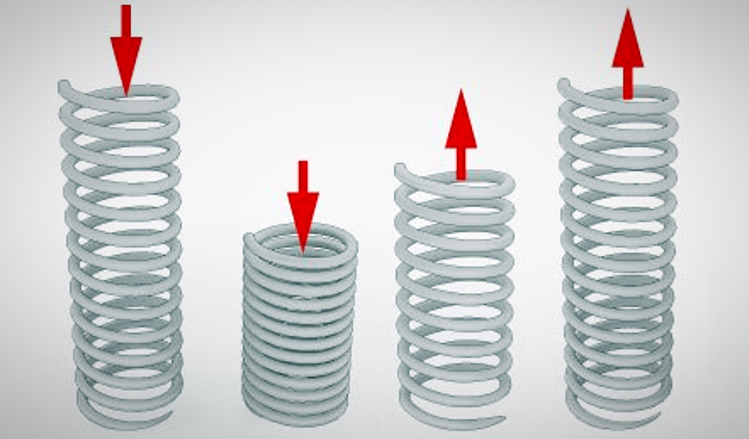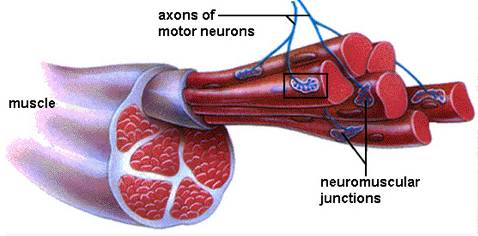
FACT OR FICTION FRIDAY || I’m too old to lift weights!

FACT OR FICTION FRIDAY || I’m too old to lift weights!
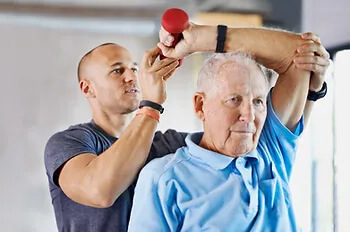
Answer: FICTION 🙊Progressive strength training in the elderly (>60 years) is efficient, even with higher intensities, to improve bone health, pack on muscle and retain function. And not surprisingly, side effects are rare!Strength training increases muscle strength by increasing muscle mass, and by improving the recruitment of motor units, and increasing their firing rate. This is no different between younger and older gym goers.
Mid Potion Achilles Tendinopathy Location

It all comes down to how you train! Training with higher loads generally provokes marginally larger gains in muscle size. Intensity corresponding above 85% of the individual maximum voluntary strength can also illicit improved rate of force development compared to 60-80%. This is imperative for reducing frailty as we age.

It is now recommended that healthy old people should train 3 or 4 times weekly for the best results; persons with poor performance at the outset can achieve improvement even with less frequent training.

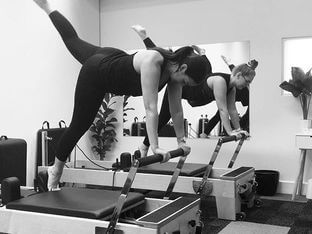
So if you are using age as an excuse – STOP! Don’t let your age be a barrier to trying new things or feeling strong. We are here to help with supervised sessions, a great network of PTs as well as our clinical reformer pilates classes which are a great way to start (or return) to strength training!

To book for a clinical pilates 1:1 session or to chat with a physio about how strength training can help you, head to our booking page or give us a call on (07) 3102 3337

Team Praxis

PREVENT | PREPARE | PERFORM

References:

Mayer, F., Scharhag-Rosenberger, F., Carlsohn, A., Cassel, M., Müller, S., & Scharhag, J. (2011). The intensity and effects of strength training in the elderly. Deutsches Ärzteblatt International, 108(21), 359.

Lopez, P., Pinto, R. S., Radaelli, R., Rech, A., Grazioli, R., Izquierdo, M., & Cadore, E. L. (2018). Benefits of resistance training in physically frail elderly: a systematic review. Aging clinical and experimental research, 30(8), 889-899.
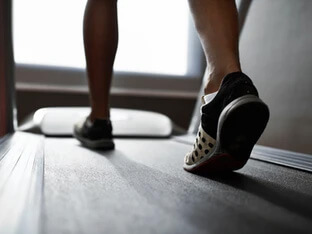
Shin Splints: Causes, Treatment & How to Get Back to Running Stronger

Shin Splints: Causes, Treatment & How to Get Back to Running Stronger

Key Takeaways

  • Shin splints (MTSS) are an overuse bone stress injury.

  • Training load errors are the biggest contributor.

  • Hip strength and force control play a major role.

  • Early management prevents stress fractures.

  • Strength + smart loading beats rest alone.

    Mid Potion Achilles Tendinopathy Location

    Shin Splints

    Shin splints, known in the research as medial tibial stress syndrome (MTSS) are one of the most common running injuries we see at Praxis Physiotherapy across our Teneriffe, Buranda and Carseldine clinics.

    If you’re noticing a dull ache along the inside of your shin that worsens with running, skipping or sport, you’re not alone. The good news? With the right plan, shin splints are highly manageable — and preventable.

    Let’s break down what’s actually happening, why it develops, and what you can start doing today.

    What Are Shin Splints (Medial Tibial Stress Syndrome)?

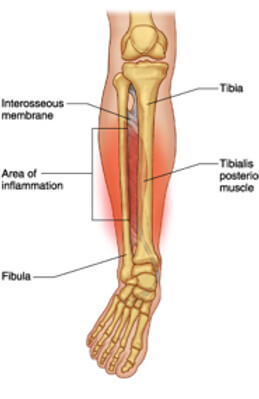
    Shin splints are an overuse bone stress injury affecting the inner (medial) border of your tibia (shin bone).

    What does it feel like?

    • Aching pain along the lower inside shin

    • Sharp pain when running or jumping

    • Tenderness to touch along the bone

    • Morning stiffness or pain when first starting activity

    Unlike a stress fracture (which is more focal and severe), shin splints usually present as a broader area of tenderness along the bone.

    What’s Actually Happening? (The Pathology Explained Simply)

    MTSS is no longer thought to be just an “inflammation” problem.

    Current evidence suggests shin splints develop due to repetitive loading that exceeds the bone’s capacity to adapt. When running loads increase too quickly, the tibia experiences repeated bending stress. If recovery isn’t adequate, this leads to:

    • Bone stress reaction

    • Irritation of the periosteum (bone lining)

    • Localised pain along the medial tibia

    If ignored, MTSS can progress to a tibial stress fracture, which requires significantly longer time away from running.

    That’s why early management matters.

    Why Do Shin Splints Develop?

    A large systematic review by Winkelmann et al. (2016) identified over 100 potential risk factors for MTSS, with several consistently seen in clinical practice.

    Key Risk Factors Supported by Research

    1. Training Load Errors
    Rapid increases in running volume, intensity, or frequency are one of the strongest contributors.
    (Winters et al., 2013; Nielsen et al., 2012)

    2. Higher Body Mass Index (BMI)
    Greater body mass increases tibial loading forces.

    3. Biomechanical Factors

    • Increased navicular drop (foot pronation)

    • Greater plantarflexion range

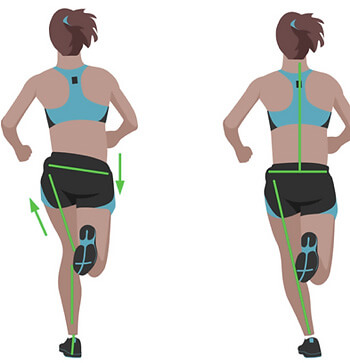
    • Hip muscle weakness and poor pelvic control

    4. Previous History of MTSS
    Recurrence risk is higher without proper rehabilitation.

    Importantly flat feet alone are rarely the sole cause.

    What we often see clinically is this chain reaction:

    Poor hip control → knee collapses inward → foot over-pronates → increased traction stress on medial tibia.

    The foot is often the victim, not the culprit.

    Why Rest Alone Isn’t Enough

    Yes — rest reduces pain. But rest does not improve:

    • Load tolerance

    • Running capacity

    • Strength deficits

    • Movement control

    This explains why shin splints are common in recreational runners but less frequent in well-structured training programs. Higher-level athletes typically follow progressive loading plans that allow bone and tendon adaptation.

    Research consistently supports graded loading and strengthening as key components of recovery (Moen et al., 2012).

    .

    How to Manage Shin Splints (Early Stage Tips)

    If your symptoms are mild to moderate, here are evidence-informed starting points:

    1️⃣ Relative Rest (Not Complete Rest)

    Reduce running volume by 30–50%.
    Avoid sharp increases in load.
    Swap some runs for cycling or swimming temporarily.

    2️⃣ Strengthen the “Shock Absorbers”

    Focus on:

    • Calf strength (bent and straight knee)

    • Tibialis posterior strengthening

    • Glute medius and hip control exercises

    • Single-leg stability work

    Improving hip strength can reduce tibial loading by improving force control through the limb.

    3️⃣ Manage Running Workload

    Follow the “10% rule” cautiously.
    Allow recovery days between harder sessions.
    Avoid sudden terrain changes (e.g., grass → concrete).

    4️⃣ Consider Footwear

    Ensure shoes are not worn out (>600–800km).
    Orthotics may help some individuals — but only after assessment.

    When Should You See a Physio?

    Seek professional assessment if:

    • Pain persists longer than 2–3 weeks

    • Pain becomes sharp and localised

    • Hopping on one leg is painful

    • Symptoms worsen despite reducing load

    Early intervention reduces the risk of progression to stress fracture.

    How Praxis Approaches Shin Splints

    At Praxis, we don’t treat “shin splints.”
    We treat your specific loading problem.

    Your plan may include:

    ✔ Comprehensive running and strength assessment
    ✔ Individualised load management plan
    ✔ Targeted strength and control program
    ✔ Manual therapy where appropriate
    ✔ Gradual return-to-run progression
    ✔ Prevention strategy for long-term performance

    Because no two runners load the same way, and no two recovery plans should be identical.

    If you’re dealing with shin splints, or want to prevent them from coming back, our team can help.

    Book an in-depth running and lower limb assessment today.

    📍 Clinics in Teneriffe, Buranda & Carseldine
    📞 (07) 3102 3337
    💻 Book online

    💪 Trusted by athletes. Backed by evidence. Here for everyone.

    The Praxis Team.

    PREVENT | PREPARE | PERFORM

    References

    • Winkelmann ZK et al. (2016). Risk factors for medial tibial stress syndrome in active individuals. Journal of Athletic Training, 51(12), 1049–1052.

    • Winters M et al. (2013). Medial tibial stress syndrome: a critical review. Sports Medicine, 43(12), 1315–1333.

    • Moen MH et al. (2012). Treatment of medial tibial stress syndrome: a systematic review. Sports Medicine, 42(11), 965–981.

    • Nielsen RO et al. (2012). Training errors and running-related injuries. International Journal of Sports Physical Therapy, 7(1), 58–75.


    Images:

    The above images are owned by the “Trainer Academy (https://traineracademy.org/) ” and used in this article with thanks.

    References:

    1. Hopper D, Deacon S, Das S, et al. Dynamic soft tissue mobilization increases hamstring flexibility in healthy male subjects. Br J Sports Med. 2004;39:594–598
    2. Weerapong, P., Hume, P.A. & Kolt, G.S. The mechanisms of massage and effects on performance, muscle recovery and injury prevention. Sports Med 2005; 35: 235
    3. Morelli M, Seaborne DE, Sullivan SJ. Changes in h-reflex amplitude during massage of triceps surae in healthy subjects.J Orthop Sports Phys Ther. 1990;12(2):55-9.
    4. Arroyo-Morales M1, Fernández-Lao C, Ariza-García A, Toro-Velasco C, Winters M, Díaz-Rodríguez L, Cantarero-Villanueva I, Huijbregts P, Fernández-De-las-Peñas C. Psychophysiological effects of preperformance massage before isokinetic exercise. J Strength Cond Res. 2011 Feb;25(2):481-8.

    https://www.massagemyotherapy.com.au/Home

    Fact or Fiction – Strength Training

    Fact or Fiction – Strength Training

    I’ve been doing my exercises for two weeks religiously and I’m no stronger! This will never work!

    ANSWER: Fiction

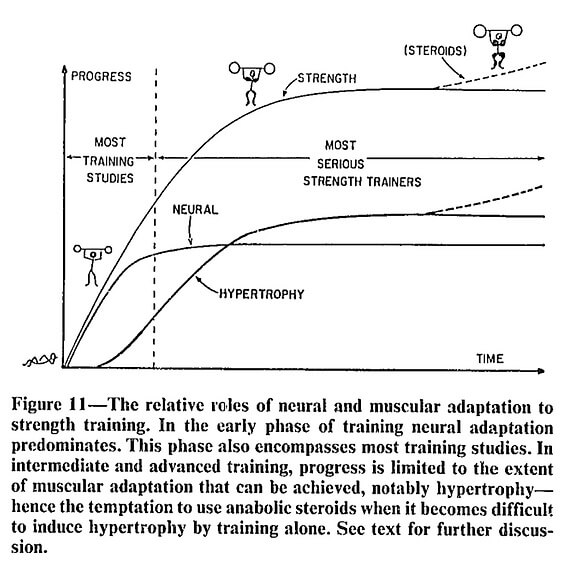
    How long does it take to have strength gains? The answer is actually in two parts. Increasing muscle size (hypertrophy) takes a minimum of 6 weeks, and repetitive exposures to fatiguing loads. BUT, neural adaptations can occur over the first 1-2 weeks.

    What the heck is neural adaptations? Imaging you have a small car battery trying to start a truck. It will struggle to do a good job again and again and fade easily. Now try using 10 of those same smaller batteries, which makes the engine start easier. A similar type of thing happens with our nervous system as we train. We become much more efficient with our neural firing to the muscle.

    As you can see in the picture below, you have a long way to go in your strengthening after those first two weeks. That is often why we often need to see beyond when the pain goes away as we know that there is so much more work to be done!

    If you have been troubled by niggles and pains, don’t hesitate to contact us to ensure we can help you prevent prepare perform! Book online or call us on (07) 3102 3337.

    #factorfictionfriday #praxisphysio #physioeducation #knowledgeiskey

    Sale, D. G. (1988). Neural adaptation to resistance training. Med Sci Sports Exerc, 20(5 Suppl), S135-145. doi:10.1249/00005768-198810001-00009

    Pilates: Reforming our back pain rehabilitation (Part 1 of 3)

    Pilates: Reforming our back pain rehabilitation (Part 1 of 3)

    With our 30 day pilates challenge starting today, we thought we would take a look at why we love pilates so much for our patients, and what some of the benefits are. Part 1 looks at how pilates affect those with chronic lower back pain. Part 2 looks at the difference between mat and reformer pilates and part 3 looks at how often is required to see the benefit of pilates.

    SUMMARY:

    • Back pain is extremely common, multifactorial, and often reoccurs
    • Strengthening interventions appear better for long term suffers of lower back pain
    • Pilates has been shown to improve muscular strength and endurance of key pelvic and postural musculature associated with lower back pain
    • Specifically, pilates promotes the restoration of the function of muscles involved in lumbopelvic stabilisation, that is, transversus abdominis, multifidus, diaphragm and pelvic floor muscles
    • As little as 2 sessions per week for 6 weeks has been shown to see improvements in pain and function for those with longstanding lower back pain, even after stopping pilates

    Chronic low back pain (CLBP) is one of the commonest musculoskeletal problems in modern society (Anderson 1999) and is a highly prevalent in both the sporting and general public. CLBP is experienced by 70%–80% of adults at some time in their lives (Crombez et al 1999) and as such, the costs associated with LBP and related disability are enormous, causing a major economic burden for patients, governments and health insurance companies (Dagenais 2008).

    Lower back pain has been one of the most extensively studied musculoskeletal conditions as a result of the prevalence and debilitation nature. Its management comprises a range of different intervention strategies including surgery, drug therapy and non-medical intervention like rehabilitation (Paolucci et al 2018). Within Physiotherapy, exercise therapy is probably the most commonly used intervention for the treatment of patients with chronic non-specific LBP due to its plausible biological rationale and low cost.

    Whilst general conditioning programs to train strength and endurance of the spine musculature have been shown to reduce pain intensity and disability (Rainville et al 2004), the popularity of pilates (both mat and reformer) has helped provide an accessible and supervised form of therapeutic exercise.

    EVIDENCE FOR PILATES

    The Pilates method, using functional exercises aims to improve muscular strength and endurance. Specifically, the pilates method have promotes the restoration of the function of muscles involved in lumbopelvic stabilisation, that is, transversus abdominis, multifidus, diaphragm and pelvic floor muscles. Using the principles of progressive overload, your body adapts to the incremental loading week after week and consequently results important postural control improvement. In 2009, Curnow and colleagues showed that the Pilates method improves load transfer through the pelvis, something that intuitively helps those with CLBP.

    However, a systematic review (Patti et al 2015) reported evidence that Pilates method-based exercises are more effective than no treatment or minimal physical exercise interventions in the management of chronic nonspecific LBP. Further, they pointed out that the effects of the Pilates method are only proven for patients with chronic nonspecific LBP in the short term.

    A recent study by Natour and colleagues (2015) showed that the group of participants that were practicing Pilates method resulted statistically better compared with the a non exercising group who only used inflammatory medication. Those who were in the pilates group used less pain medication at 45, 90 (conclusion of the Pilates method), and 180 days, 90 days after the conclusion of the exercise program.

    In conclusion, Pilates as an exercise choice is more effective than minimal physical exercise or drug based interventions in reducing pain and disability in the short-term period. There is agreement that exercise “helps” in the treatment of chronic pain, but it is still not clear exactly which factors or particular kind of exercises may be responsible of such improvements (Natour et al 2015; Patti et al 2015). Praxis Physiotherapy has always been a strong proponent of movement and loading early in rehabilitation (more on this in later blogs!).

    In the next instalment, we discuss the difference between mat and reformer pilates and perhaps find some more answers regarding which exercise regime reigns supreme!

    Check out all our other reformer pilates services on our website

    Until next time,

    Prevent. Prepare. Perform.

    References:

    1. Andersson GB. Epidemiological features of chronic low-back pain. Lancet. 1999;354(91789178):581–585.
    2. Crombez G, Vlaeyen JW, Heuts PH, Lysens R, Crombez G. Pain-related fear is more disabling than pain itself: evidence on the role of pain-related fear in chronic back pain disability. Pain. 1999;80(1-2):329–339.
    3. Dagenais DC, Caro J, Haldeman S. A systematic review of low back pain cost of illness studies in the United States and internationally. The Spine Journal 2008;8(1):8‐20.
    4. Paolucci, T., Attanasi, C., Cecchini, W., Marazzi, A., Capobianco, S. V., & Santilli, V. (2019). Chronic low back pain and postural rehabilitation exercise: a literature review. Journal of pain research, 12, 95.
    5. Rainville J, Hartigan C, Martinez E, Limke J, Jouve C, Finno M. Exercise as a treatment for chronic low back pain. Spine J. 2004;4:106-115
    6. Patti, A., Bianco, A., Paoli, A., Messina, G., Montalto, M. A., Bellafiore, M., … & Palma, A. (2015). Effects of Pilates exercise programs in people with chronic low back pain: a systematic review. Medicine, 94(4).
    7. Curnow, D., Cobbin, D., Wyndham, J., & Choy, S. B. (2009). Altered motor control, posture and the Pilates method of exercise prescription. Journal of bodywork and movement therapies, 13(1), 104-111.
    8. Natour, J., Cazotti, L. D. A., Ribeiro, L. H., Baptista, A. S., & Jones, A. (2015). Pilates improves pain, function and quality of life in patients with chronic low back pain: a randomized controlled trial. Clinical rehabilitation, 29(1), 59-68.
    Why lifting is your missing endurance link: A guide for long distance runners (Part 1)

    Why lifting is your missing endurance link: A guide for long distance runners (Part 1)

    You have the shoes, the GPS watch, training schedule and alarm set for 5am. You are dedicated and that race is right around the corner. Whether it is your first 5km or your 50th marathon, the thrill of crossing the finish line drives us all. Whilst you may know your average km split time like the back of your hand, do you know how strong your lunges or deadlifts are? If you haven’t stepped foot in a gym recently, then research suggests you could be missing out on a host of positive effects on your running.There has been a whole host of research in this area so deciphering the literature can be a difficult task. Thankfully, a recent paper by Blagrove et al [1] has done much of the hard work for us. The paper entitled Effects of Strength Training on the Physiological Determinants of Middle- and Long-Distance Running Performance: A Systematic Review aimed to provide a comprehensive critical commentary on the current literature that has examined the effects of strength training modalities on the physiological determinants and performance of middle and long-distance runners. They also offered recommendations for best practice which you can read about in the Part 2 blog post.
    Running is a surprisingly complex task and as such there are many factors that affect performance. Physiological, biomechanical, psychological, environmental, and tactical factors all inter play to result in determining the average runner from the elite. With respect to physiological markers of performance, maximal oxygen uptake (known as VO2max), running economy, and the sustainable percentage of VO2max go a long way to determining performance [2]. In fact, these three elements can predict performance with up to 95% accuracy in well trained runners.The difference between VO2max in the elite running population however is surprisingly marginal. On the contrary, running efficiency displays a high degree of inter-individual variability and thus a potential area to better discriminate between runners and their respective performance [3]. Defined as the oxygen or energy cost of sustaining a given sub-maximal running velocity, running efficiency is underpinned by a variety of anthropometric, physiological, biomechanical, and neuromuscular factors [4]. More specifically to the purpose of this article, force generation and stretch–shortening cycles are the neuromuscular factors that are the most relevant.Whilst force production of a muscle is a straight forward concept, the stretch shortening cycles may not be. Stretch shortening cycles describe the pre-stretch and recoil action of a muscle and tendon unit that occurs in a dynamic action just as jumping. Think of the stretch shortening cycle like a spring whereby energy is stored and released within the spring, or in real terms, the musculo-tendinous unit. To produce higher forces, the more motor units (muscle) are required [5]. There is a strong correlation between the cross-sectional area of a muscle and its ability to produced force. Several other factors are involved, but for the most part, a larger muscle will produce more force than a smaller muscle. However, force production becomes more difficult when activities are dynamic. This is because there is a reduction in force produced per motor unit due to the faster shortening velocity involved in the stretch shortening cycle [5].In general, strength training activities can positively affect both muscle force as well as improve the stretch-shortening cycle through several different adaptations including muscular and neural changes [6, 7]. Hypertrophy is the term to describe an increase in muscle size. It is the cyclical process whereby muscle cells are exposed to repeated bouts of exercise causing micro damage to the muscle cells. Micro damage causes an inflammatory response and it is the pain you feel for the next 48hrs after a bout of exercise (also called delayed onset muscle soreness or DOMS for short). It is also the stimulus for the body to mitigate future damage by repairing the damaged tissue and adding more muscle cells. This is what is commonly known as the super compensation cycle. Hypertrophy is aided by rest, dietary protein, certain hormones (e.g testosterone) and has a very strong genetic component as well [7].
    Neural adaptation tends to be one of the earliest changes and accounts for most of the strength increases observed in the initial stages of all strength training [8]. Those who are exposed to repeated bouts of resistance training generate significant strength gains with minimal hypertrophy early in the process. The body achieves this via synchronous activation (the ability to recruit more muscle cells in a simultaneous fashion) and reduction in neural inhibition (a natural response of the central nervous system to feedback signals arising from the muscle) [9]. Inhibition allows muscle to avoid overworking and potentially damaging itself due to unaccustomed load. This response is rapid as it utilises the nerve and muscle cells already present. These adaptations are in direct contrast to the untrained muscle in which atrophy (muscle wastage) and reduced neural drive are typical.What this all boils down to is that following a period of strength training there is an increase in absolute motor unit recruitment resulting in a lower relative intensity of that muscle unit to deliver the same outcome as previous. If the bouts are habitual and frequent enough, muscle cells hypertrophy and become larger, increasing their ability to generate force. As a result, the trained muscle will be able to recruit a higher threshold of larger motor units. Combine all of this with an enhanced stretch shortening cycle and you have some excellent adaptations to improve running efficiency.

    With respect to the dosage, the Blagrove paper suggested, a strength training intervention, lasting 6–20 weeks, added to the training program of a distance runner appears to enhance running efficiency by 2–8%. In real terms, an improvement in running efficiency of this magnitude should theoretically allow a runner to operate at a lower relative intensity and thus improve training and/or race performance. Improvements were observed in moderately-trained, well-trained and highly-trained participants, suggesting runners of any training status can benefit from strength training. For the particulars of the dosage, exercise selection and periodisation, check out Part 2 blog post.

    Until next time, continue to Praxis What You Preach…

    Prevent. Prepare. Perform.

    References:

    1. RC. Blagrove, G Howatson, PR. Hayes. Effects of Strength Training on the Physiological Determinants of Middle- and Long-Distance Running Performance: A Systematic Review, Sports Med. 2018; 48(5):1117-1149
    2. McLaughlin JE, Howley ET, Bassett DR Jr, et al. Test of the classic model for predicting endurance running performance. Med Sci Sports Exerc. 2010;42(5):991–7
    3. Morgan DW, Craib M. Physiological aspects of running economy. Med Sci Sports Exerc. 1992;24(4):456–61.
    4. Saunders PU, Pyne DB, Telford RD, Hawley JA. Factors affecting running economy in trained distance runners. Sports Med. 2004;34(7):465–85.
    5. Barnes KR, Kilding AE. Running economy: measurement, norms, and determining factors. Sports Med. 2015;1(1):8–15
    6. Denadai BS, de Aguiar RA, de Lima LC, et al. Explosive training and heavy weight training are effective for improving running economy in endurance athletes: a systematic review and meta-analysis. Sports Med. 2017;47(3):545–54
    7. Schoenfeld BJ, Ogborn D, Krieger JW. Effects of resistance training frequency on measures of muscle hypertrophy: a systematic review and meta-analysis. Sports Med. 2016;46(11):1689–97
    8. Aagaard P , Simonsen EB , Magnusson SP , Andersen JL , Dyhre-Poulsen P. .Enhanced motoneuron activation as effect of heavy-resistance strength training in man.Med Sci Sports Exerc 29: S23-1997.
    9. Aagaard, P., E. B. Simonsen, J. L. Andersen, S. P. Magnusson, J. Halkjær-Kristensen, and P. DyhrePoulsen. Neural inhibition during maximal eccentric and concentric quadriceps contraction: effects of resistance training. J Appl Physiol 89: 2249–2257, 2000