
The CKCUEST: The Shoulder Stability Test That Predicts Whether You’re Really Ready for Contact

The CKCUEST: The Shoulder Stability Test That Predicts Whether You’re Really Ready for Contact

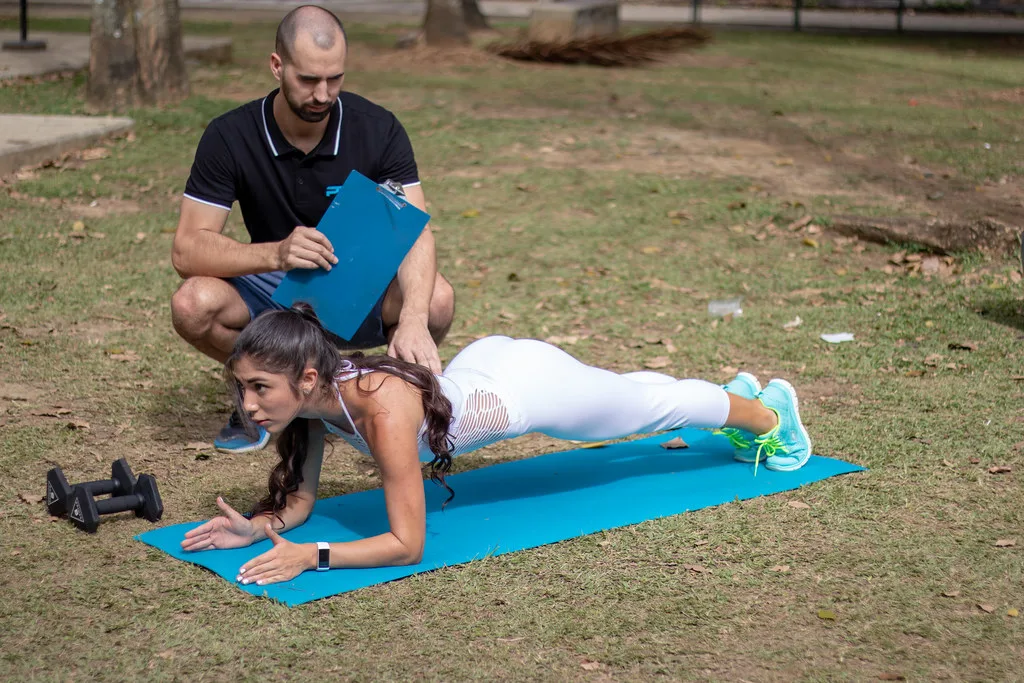
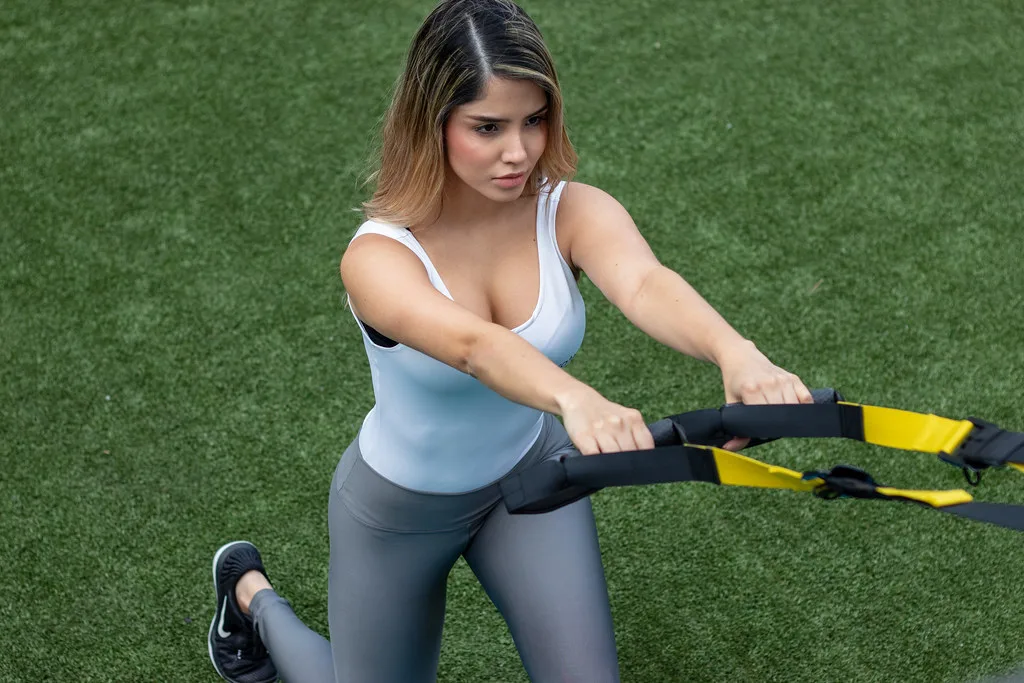
Athlete in push-up position, loading the shoulder in a closed kinetic chain position

Shoulder rehab tends to focus heavily on range of motion and pain. Both matter, but neither tells you whether a shoulder can actually take the repeated, high-load demands of throwing, tackling, or pushing off the ground in contact sport. The Closed Kinetic Chain Upper Extremity Stability Test, usually shortened to CKCUEST, is one of the few shoulder tests with solid evidence behind it as a return-to-sport measure.

WHAT THE TEST ACTUALLY MEASURES

The test is performed in a push-up position, hands on the floor a set distance apart. The athlete repeatedly reaches one hand across to touch the opposite hand and back, alternating sides, for 15 seconds. The number of touches is counted and compared side to side. Because the hands stay planted on the ground throughout, the shoulder has to stabilise under load while the trunk and opposite arm move around it. That mimics the demands placed on the shoulder during contact, tackling, and load-bearing sport far better than a simple range-of-motion or isolated strength test.

A 2014 reliability study by Tucci and colleagues, published in BMC Musculoskeletal Disorders, tested the CKCUEST in 108 people with and without shoulder impingement syndrome. It proved to be a reliable measure across both groups, with people who had shoulder pain scoring consistently lower than those without. The test has since been shown to correlate with grip strength and with isokinetic shoulder rotator strength, both established markers of shoulder capacity.

WHY TESTING BEATS GUESSING

Shoulder return-to-sport decisions are often made once pain has settled and range of motion has returned, without a load-bearing capacity test being part of the picture at all. That’s a gap. Pain resolution and true stability under load are not the same thing, and the CKCUEST is specifically designed to expose that gap before an athlete finds out the hard way in a match.

The broader principle here is consistent with return-to-sport research from other joints: a 2016 Delaware-Oslo cohort study by Grindem and colleagues found that athletes cleared using objective discharge testing, rather than pain and time alone, had an 84% lower rate of reinjury after ACL reconstruction. A related study by Kyritsis and colleagues found a fourfold increase in reinjury risk in those who didn’t meet full discharge criteria. Neither study is shoulder-specific, but the same logic applies directly: an objective, load-based test catches deficits that subjective readiness does not.

THE KINETIC CHAIN COST OF CUTTING CORNERS

A shoulder that returns to contact or overhead sport under-stabilised doesn’t just risk re-injuring itself. Athletes commonly compensate for shoulder instability by altering trunk and scapular mechanics. That can transfer load into the neck, the opposite shoulder, and the elbow over a season of repeated throwing or tackling. This same adjacent-site pattern is well documented after lower limb injury too. A 2016 systematic review by Wiggins and colleagues found that athletes returning to sport after ACL reconstruction had a roughly even split between reinjuring the same knee and the opposite knee. This illustrates how an under-tested joint tends to push the injury risk sideways through the kinetic chain rather than removing it.

Recurrent shoulder instability also has a well-established compounding effect. Each dislocation or subluxation tends to make the next one more likely, and chronic instability is a recognised pathway toward earlier degenerative change in the joint. A capacity test that catches inadequate stability before return to sport is one of the more practical ways to interrupt that cycle.

WHAT WE DO AT PRAXIS

We use the CKCUEST alongside rotator cuff strength testing and sport-specific loading progressions before clearing athletes back to contact, throwing, or overhead sport after shoulder injury or surgery. If you’re returning from a shoulder injury, dislocation, or rotator cuff repair, book a return-to-sport assessment with our team.

Until next time, Praxis What You Preach…

📍 Clinics in Teneriffe, Woolloongabba, and Carseldine

💪 Trusted by athletes. Backed by evidence. Here for everyone.

Related Articles

Rotator Cuff Repair: A Physiotherapy Guide on Recovery and Rehabilitation
A full guide to rotator cuff repair recovery, from early protection through to return to sport.

Shoulder Stabilisation and Bankart Repair: Your Path Back to Sport
Rehabilitation and return-to-sport testing after shoulder stabilisation and Bankart repair surgery.

Return to Sport Testing: The Complete Guide

One evidence-based capacity test for every major joint, and why testing beats guessing.

References

Tucci HT, Martins J, Sposito GC, Camarini PMF, de Oliveira AS. Closed Kinetic Chain Upper Extremity Stability test (CKCUES test): a reliability study in persons with and without shoulder impingement syndrome. BMC Musculoskeletal Disorders. 2014;15:1.

Grindem H, Snyder-Mackler L, Moksnes H, Engebretsen L, Risberg MA. Simple decision rules can reduce reinjury risk by 84% after anterior cruciate ligament reconstruction: the Delaware-Oslo ACL cohort study. British Journal of Sports Medicine. 2016;50(13):804-808.

Kyritsis P, Bahr R, Landreau P, Miladi R, Witvrouw E. Likelihood of ACL graft rupture: not meeting six clinical discharge criteria before return to sport is associated with a four times greater risk of rupture. British Journal of Sports Medicine. 2016;50(15):946-951.

Wiggins AJ, Grandhi RK, Schneider DK, Stanfield D, Webster KE, Myer GD. Risk of secondary injury in younger athletes after anterior cruciate ligament reconstruction: a systematic review and meta-analysis. American Journal of Sports Medicine. 2016;44(7):1861-1876.


The Hop Test Battery: Why 90% Symmetry Is the Number That Actually Matters After ACL

The Hop Test Battery: Why 90% Symmetry Is the Number That Actually Matters After ACL

Basketball player jumping, loading the knee in the way assessed by hop testing

Ask most people recovering from an ACL reconstruction when they’re “ready” to return to sport. The honest answer is usually a date on a calendar: nine months, twelve months, whatever their surgeon or coach mentioned early on. The evidence says that date should mean very little on its own. What predicts whether the knee will hold up is how it performs on a battery of hop tests, compared directly against the uninjured leg.

WHAT THE TEST ACTUALLY MEASURES

The standard hop test battery includes four tests: a single hop for distance, a triple hop for distance, a crossover hop for distance, and a six-metre timed hop. Each test is performed on one leg and compared to the other, producing a Limb Symmetry Index, the injured leg’s performance expressed as a percentage of the uninjured leg’s. This four-test battery was first described by Noyes and colleagues in 1991 and remains the backbone of return-to-sport testing after ACL injury today.

The generally accepted target is a Limb Symmetry Index of at least 90% across all four hop tests, alongside adequate quadriceps and hamstring strength. Below that threshold, the evidence is clear that the knee is not mechanically ready for the deceleration, cutting, and landing forces of full sport.

WHY TESTING BEATS GUESSING

This is one of the best-studied areas in all of sports rehabilitation. A 2016 Delaware-Oslo cohort study by Grindem and colleagues, published in the British Journal of Sports Medicine, followed ACL-reconstructed athletes. Those who passed a battery of objective discharge criteria, including hop testing, had an 84% lower rate of reinjury than those cleared on time alone. A related study by Kyritsis and colleagues found that athletes who returned to sport without meeting all six clinical discharge criteria were four times more likely to rupture their graft.

Despite this, surveys of ACL rehabilitation consistently find that a large proportion of athletes are cleared to return using time since surgery as the primary criterion. Formal hop testing is used far less often than the evidence would suggest it should be. Passing the hop battery does not guarantee a reinjury-free return. But failing it is one of the more reliable predictors we have that the graft or the other knee is at meaningfully higher risk.

THE KINETIC CHAIN COST OF CUTTING CORNERS

Perhaps the most sobering statistic in this area comes from a 2016 systematic review and meta-analysis by Wiggins and colleagues. It found an overall second ACL injury rate of around 15% in athletes who returned to sport after reconstruction, roughly split between the same knee (7%) and the opposite knee (8%). For athletes under 25 who returned to a high level of sport, that combined risk rose to around 23%. That contralateral figure is exactly the kinetic chain effect hop testing is designed to catch. An athlete compensating for a knee that isn’t fully ready places disproportionate load on the other leg, and it is often the other leg that fails first.

THE LONG-TERM PICTURE

The honest, harder-to-hear evidence concerns long-term joint health. A widely cited 2009 systematic review by Øiestad and colleagues was published in the American Journal of Sports Medicine. It found that osteoarthritis develops in a substantial proportion of knees within 10 to 15 years of an ACL injury, whether or not the ligament is surgically reconstructed. Reconstruction reduces the chance of the knee giving way and needing a total knee replacement later, but it does not, by itself, prevent osteoarthritis. What does appear to matter is minimising further trauma to the joint. Every additional graft rupture, meniscus tear, or cartilage injury adds to that long-term risk. Passing objective hop testing before return to sport is one of the few modifiable factors that reduces the odds of exactly that kind of additional trauma.

WHAT WE DO AT PRAXIS

Our sports physiotherapists run the full four-test hop battery alongside strength testing and movement quality screening before clearing anyone back to cutting, pivoting, or contact sport after an ACL injury. If you’re approaching return to sport after ACL reconstruction, book a return-to-sport assessment with our team and test the knee properly, rather than guessing from the calendar.

Until next time, Praxis What You Preach…

📍 Clinics in Teneriffe, Woolloongabba, and Carseldine

💪 Trusted by athletes. Backed by evidence. Here for everyone.

Related Articles

ACL Reconstruction Rehab, Week-by-Week Recovery Guide with Praxis Physio

A full week-by-week guide to ACL reconstruction rehabilitation, from surgery through to return to sport.

Knee Osteoarthritis: Is 'Bone on Bone' a painful life sentence?

What the evidence actually says about knee osteoarthritis, and why it isn’t the life sentence it can feel like.

Return to Sport Testing: The Complete Guide

One evidence-based capacity test for every major joint, and why testing beats guessing.

References

Noyes FR, Barber SD, Mangine RE. Abnormal lower limb symmetry determined by function hop tests after anterior cruciate ligament rupture. American Journal of Sports Medicine. 1991;19(5):513-518.

Grindem H, Snyder-Mackler L, Moksnes H, Engebretsen L, Risberg MA. Simple decision rules can reduce reinjury risk by 84% after anterior cruciate ligament reconstruction: the Delaware-Oslo ACL cohort study. British Journal of Sports Medicine. 2016;50(13):804-808.

Kyritsis P, Bahr R, Landreau P, Miladi R, Witvrouw E. Likelihood of ACL graft rupture: not meeting six clinical discharge criteria before return to sport is associated with a four times greater risk of rupture. British Journal of Sports Medicine. 2016;50(15):946-951.

Wiggins AJ, Grandhi RK, Schneider DK, Stanfield D, Webster KE, Myer GD. Risk of secondary injury in younger athletes after anterior cruciate ligament reconstruction: a systematic review and meta-analysis. American Journal of Sports Medicine. 2016;44(7):1861-1876.
Øiestad BE, Engebretsen L, Storheim K, Risberg MA. Knee osteoarthritis after anterior cruciate ligament injury: a systematic review. American Journal of Sports Medicine. 2009;37(7):1434-1443.

The Standing Heel-Rise Test: The Calf Strength Number Too Many Athletes Skip

The Standing Heel-Rise Test: The Calf Strength Number Too Many Athletes Skip

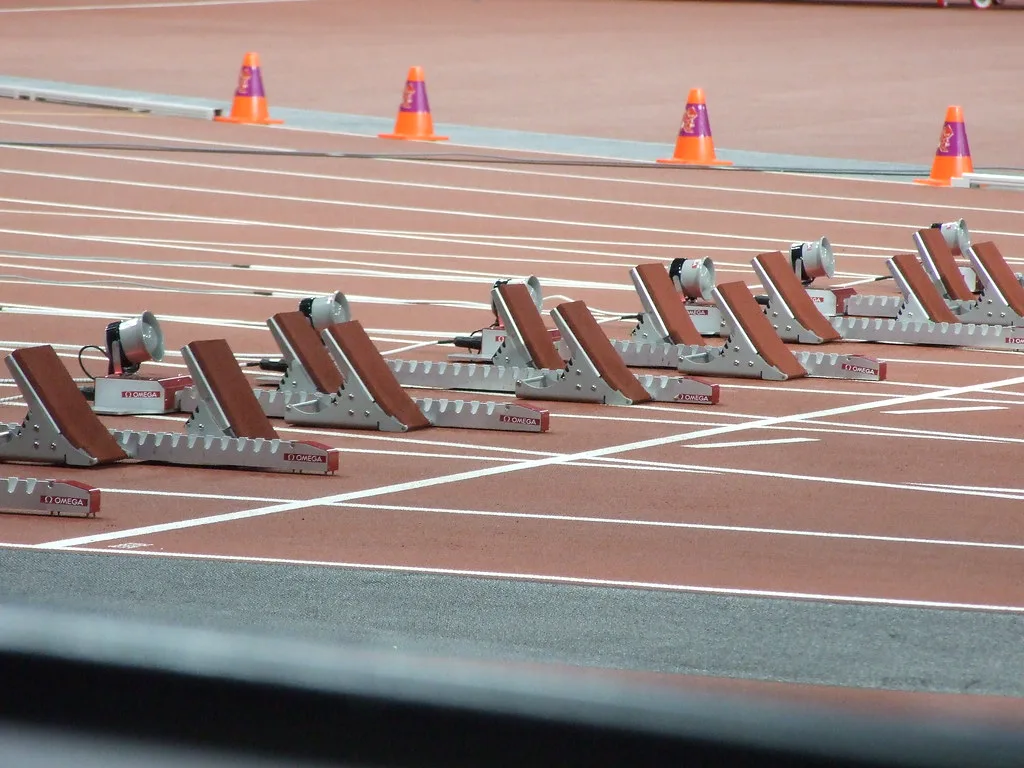
Sprinter in starting blocks, loading the calf before push-off

Calf strains have a habit of feeling better long before the muscle is actually ready to sprint again. The pain settles, walking feels normal, even light jogging feels fine, and then the same calf gives way again the moment real speed or a sudden change of direction is asked of it. The standing heel-rise test is one of the simplest ways to find out whether the gap between “feels fine” and “is fine” has actually closed.

It’s a test we come back to again and again in calf and Achilles rehab, because unlike a pain scale, it produces a number you can track and compare against normal values for your age and activity level.

WHAT THE TEST ACTUALLY MEASURES

The test is performed standing on one leg, typically on a slight incline or the edge of a step. The athlete rises up onto the toes as many times as possible until the calf fatigues or the heel can no longer clear full height. It is a direct measure of calf muscular endurance and strength, primarily the soleus and gastrocnemius, which are exactly the muscles responsible for propulsion during running, jumping, and changing direction.

A large 2017 study by Hébert-Losier and colleagues, published in Physiotherapy, tested 566 healthy adults aged 20 to 81 performing single-leg heel raises to fatigue on a 10-degree incline. The test proved highly reliable, with normative values that account for age, sex, body mass index, and activity level. That matters clinically. A 25-year-old club athlete and a 55-year-old weekend runner shouldn’t be judged against the same benchmark. This test gives us a legitimate way to compare someone against people like them, not against an arbitrary round number.

WHY TESTING BEATS GUESSING

Calf strains are notorious for being cleared on pain alone. Walking and even jogging can feel completely normal well before the muscle can tolerate the eccentric loading of a sprint or a sudden stop. This is the same trap that drives reinjury across almost every soft tissue injury in sport.

A 2016 Delaware-Oslo cohort study by Grindem and colleagues followed athletes recovering from ACL reconstruction. Those cleared using objective discharge criteria, rather than pain and time alone, had an 84% lower rate of reinjury. A related study by Kyritsis and colleagues found a fourfold increase in reinjury risk in athletes who returned without meeting all discharge criteria. Neither study is about the calf specifically, but the underlying lesson transfers directly. A muscle that feels fine and a muscle that tests fine are not always the same muscle, and testing is what tells the two apart.

THE KINETIC CHAIN COST OF CUTTING CORNERS

A calf that returns to sport under-strength rarely stays a calf problem. Reduced push-off power tends to shift load up into the Achilles tendon and down into the plantar fascia and foot, both common sites of secondary injury after an undertreated calf strain. It can also change stride mechanics enough to load the hamstring and knee differently on the same leg. The broader principle is well established in the return-to-sport literature. When one link in the chain returns underprepared, the sites next in line, whether the same joint or an adjacent one, absorb the shortfall. It’s the same pattern seen in ACL research. A 2016 review by Wiggins and colleagues found second injury rates split almost evenly between the same knee and the opposite knee in athletes who returned to sport too early.

Calf strains also become more likely to recur with each occurrence, as we’ve written about previously in relation to age-related calf tears. Confirming heel-rise capacity before clearing someone for sprinting isn’t just about this injury. It’s about breaking a pattern that, left unaddressed, tends to repeat every pre-season.

WHAT WE DO AT PRAXIS

We use the standing heel-rise test alongside calf and Achilles loading progressions and sprint mechanics screening to confirm a calf is genuinely ready for full training, not just pain-free at walking pace. If you’re coming back from a calf strain, or you want a baseline before pre-season starts, book a return-to-sport assessment with our team.

Until next time, Praxis What You Preach…

📍 Clinics in Teneriffe, Woolloongabba, and Carseldine

💪 Trusted by athletes. Backed by evidence. Here for everyone.

Related Articles

Old Man Calf: Why Calf Tears Become So Common After 40

Why calf strains become more frequent with age, and what the research says helps prevent them.

Achilles Tendinopathy: How to treat your Achilles Pain

How an under-recovered calf can shift load into the Achilles, and what evidence-based treatment looks like.

Return to Sport Testing: The Complete Guide

One evidence-based capacity test for every major joint, and why testing beats guessing.

References

Hébert-Losier K, Wessman C, Alricsson M, Svantesson U. Updated reliability and normative values for the standing heel-rise test in healthy adults. Physiotherapy. 2017;103(4):446-452.

Grindem H, Snyder-Mackler L, Moksnes H, Engebretsen L, Risberg MA. Simple decision rules can reduce reinjury risk by 84% after anterior cruciate ligament reconstruction: the Delaware-Oslo ACL cohort study. British Journal of Sports Medicine. 2016;50(13):804-808.

Kyritsis P, Bahr R, Landreau P, Miladi R, Witvrouw E. Likelihood of ACL graft rupture: not meeting six clinical discharge criteria before return to sport is associated with a four times greater risk of rupture. British Journal of Sports Medicine. 2016;50(15):946-951.

Wiggins AJ, Grandhi RK, Schneider DK, Stanfield D, Webster KE, Myer GD. Risk of secondary injury in younger athletes after anterior cruciate ligament reconstruction: a systematic review and meta-analysis. American Journal of Sports Medicine. 2016;44(7):1861-1876.
The Nordic Curl Test: Why Hamstring Strength Predicts Whether You’ll Tear It Again

The Nordic Curl Test: Why Hamstring Strength Predicts Whether You’ll Tear It Again

Sprinter demonstrating hamstring capacity needed before return to sport

Hamstring strains have a reputation, and it’s not a good one. They are one of the most common injuries in running and field sports, and they are notorious for coming back. Depending on the sport, somewhere between one in five and one in three athletes who return after a hamstring strain re-injure the same muscle within the following year. That reinjury often happens within the first few weeks of full training. The usual culprit isn’t bad luck. It’s returning to sport on a calendar instead of on evidence that the muscle is actually ready to take the load again.

The Nordic hamstring curl test is one of the most useful tools physiotherapists have for closing that gap. It doesn’t just tell you whether a hamstring feels okay. It tells you how much eccentric strength the muscle can produce under load, which is the exact quality that gets punished in the final stride of a sprint.

WHAT THE TEST ACTUALLY MEASURES

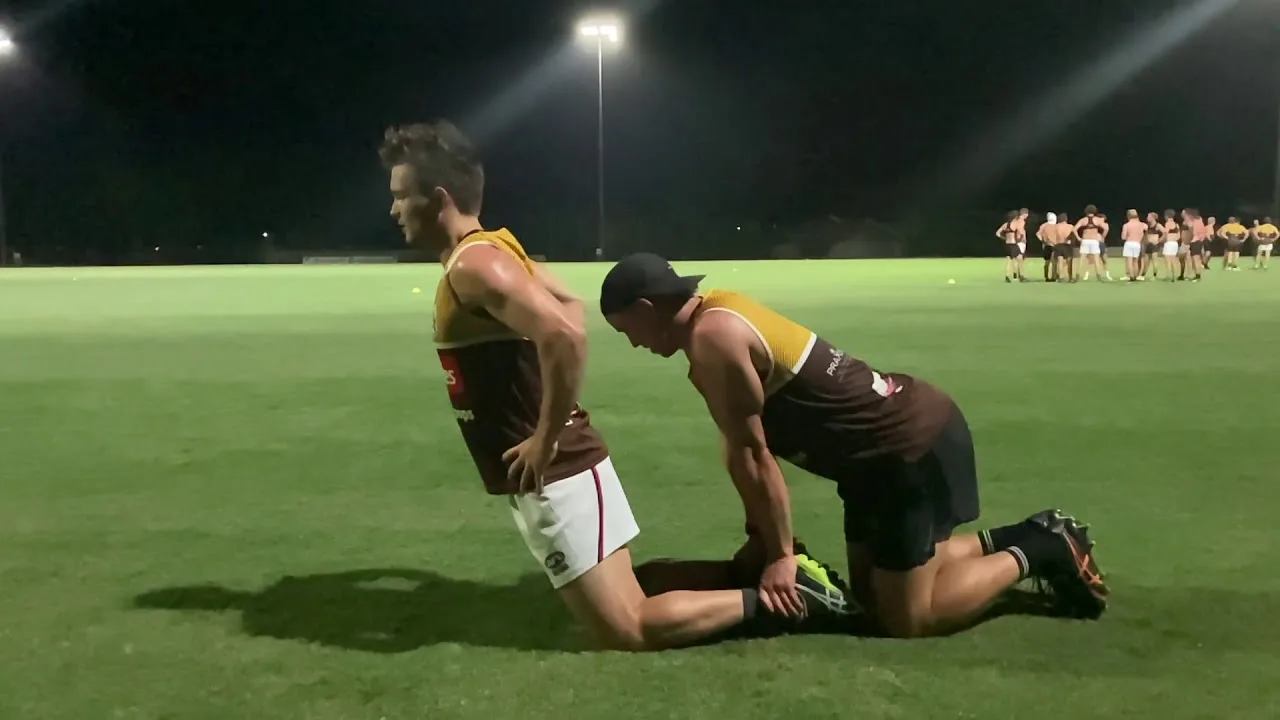
The test is performed kneeling, with the ankles fixed by a partner, a strap, or a purpose-built device such as a NordBord. From an upright kneeling position, you lower your body toward the floor as slowly as possible under control, using the hamstrings to resist gravity. Then you catch yourself with your hands at the point you can no longer control the descent. What’s being tested is eccentric hamstring strength: the muscle’s ability to produce force while lengthening. That’s precisely what happens in the split second before a hamstring tears during the late swing phase of sprinting.

A 2016 prospective cohort study of elite footballers by Timmins and colleagues was published in the British Journal of Sports Medicine. It found that players with weaker eccentric hamstring strength and shorter biceps femoris fascicles were significantly more likely to sustain a hamstring strain over the following season. Both qualities can be measured directly with Nordic curl testing, and both respond well to targeted training.

WHY TESTING BEATS GUESSING

Comparing left leg to right leg is only part of the picture with hamstrings. Both legs can be underprepared after a period of reduced training. What matters more is whether force output has been restored to pre-injury levels and whether it holds up across multiple repetitions, not just a single good attempt.

This objective approach is backed by a growing body of return-to-sport literature. A 2016 Delaware-Oslo cohort study by Grindem and colleagues followed athletes recovering from ACL reconstruction. Those who passed a battery of objective discharge criteria, rather than being cleared on time alone, had an 84% lower rate of reinjury. A related study by Kyritsis and colleagues found that athletes who returned to sport without meeting all discharge criteria were four times more likely to re-rupture their graft. Hamstring rehabilitation follows the same principle: numbers, not calendars, should decide when someone returns.

In practice, we retest through the later stages of hamstring rehab, tracking both absolute force and side-to-side symmetry. That way, return-to-running and return-to-sprint decisions are based on a trend, not a single good day.

THE KINETIC CHAIN COST OF CUTTING CORNERS

An under-recovered hamstring rarely fails in isolation. When the primary decelerator of the leg is weak, the body finds load somewhere else. That’s often the adjacent hip and groin muscles, or the same hamstring on the opposite leg as it compensates for altered running mechanics. The clearest evidence for this adjacent-site effect comes from ACL research. A 2016 systematic review by Wiggins and colleagues found a 15% overall rate of a second ACL injury in athletes returning to sport, split almost evenly between the same knee and the opposite knee. Hamstring-specific data is less complete, but the underlying principle holds across the kinetic chain. A muscle that returns to sport underprepared changes how load is shared through the rest of the leg, and that redistribution is often where the next injury shows up.

Repeated hamstring strains also compound over time. Each re-tear tends to leave more scar tissue and more fascicle shortening behind. That produces a muscle that is mechanically less able to absorb high-speed loading, which is exactly the pattern that predicts the next strain. Testing before return isn’t just about avoiding a setback this season. It’s about protecting the tissue quality that determines how the hamstring performs for years afterward.

WHAT WE DO AT PRAXIS

Our sports physiotherapists use Nordic curl testing alongside sprint mechanics assessment and graded loading progressions to build an objective picture of readiness, rather than relying on pain or time since injury alone. If you’re recovering from a hamstring strain, or you simply want to know where your numbers sit before pre-season, book a return-to-sport assessment with our team.

Until next time, Praxis What You Preach…

📍 Clinics in Teneriffe, Woolloongabba, and Carseldine

💪 Trusted by athletes. Backed by evidence. Here for everyone.

Related Articles

Nordic Curls and the Copenhagen Plank: Two Exercises That Could Save Your Season

Two evidence-based exercises that build the eccentric strength shown to reduce hamstring and groin strain risk.

Hamstring Strain Injuries: Lessons from Personal Experience and the Latest Research

What the research says about hamstring strain recovery, and why so many reinjuries happen too soon.

Return to Sport Testing: The Complete Guide

One evidence-based capacity test for every major joint, and why testing beats guessing.

References

Timmins RG, Bourne MN, Shield AJ, Williams MD, Opar DA. Short biceps femoris fascicles and eccentric knee flexor weakness increase the risk of hamstring injury in elite football (soccer): a prospective cohort study. British Journal of Sports Medicine. 2016;50(24):1524-1535.

Grindem H, Snyder-Mackler L, Moksnes H, Engebretsen L, Risberg MA. Simple decision rules can reduce reinjury risk by 84% after anterior cruciate ligament reconstruction: the Delaware-Oslo ACL cohort study. British Journal of Sports Medicine. 2016;50(13):804-808.

Kyritsis P, Bahr R, Landreau P, Miladi R, Witvrouw E. Likelihood of ACL graft rupture: not meeting six clinical discharge criteria before return to sport is associated with a four times greater risk of rupture. British Journal of Sports Medicine. 2016;50(15):946-951.

Wiggins AJ, Grandhi RK, Schneider DK, Stanfield D, Webster KE, Myer GD. Risk of secondary injury in younger athletes after anterior cruciate ligament reconstruction: a systematic review and meta-analysis. American Journal of Sports Medicine. 2016;44(7):1861-1876.
Return to Sport Testing: Why the Best Athletes Don’t Guess, They Test

Return to Sport Testing: Why the Best Athletes Don’t Guess, They Test

Sprinters in starting blocks, ready to return to competition

Ask most injured athletes when they’ll be back, and they’ll give you a date. Six weeks. Three months. Next pre-season. It’s a completely understandable way to think about recovery, and it’s also not how the tissue actually heals. A calendar tells you nothing about how much force a hamstring can produce eccentrically, how symmetrically a knee can absorb a landing, or whether a shoulder can stabilise under load. The athletes who come back faster, and stay back, aren’t the ones who wait the longest. They’re the ones who get tested.

This is the idea behind return-to-sport testing: replacing “does it feel okay?” with an objective number, measured against a normal value or against the uninjured side, before clearing someone for full training or competition. It sounds simple, and it is, but it consistently changes outcomes in ways that time alone doesn’t.

TESTING GETS YOU BACK FASTER, NOT JUST SAFER

There’s a common assumption that objective testing means a slower, more cautious return. In practice it often does the opposite. Athletes who are tracked against clear numeric targets, rather than a fixed timeframe, can sometimes be cleared earlier than a generic protocol would allow. That’s because the criteria are about capacity, not the calendar. Just as importantly, testing identifies specific deficits: a weak eccentric hamstring, a hip that collapses under single-leg load, a shoulder that fatigues early under closed-chain demand. It catches these early enough that they can be trained out before return, rather than discovered the hard way mid-season.

THE SAME-SITE RISK: WHY OBJECTIVE CRITERIA MATTER

The clearest evidence for testing over timelines comes from ACL research, simply because it’s the most heavily studied return-to-sport pathway in sports medicine. A 2016 Delaware-Oslo cohort study by Grindem and colleagues, published in the British Journal of Sports Medicine, looked at athletes who passed a battery of objective discharge criteria before returning to sport. They had an 84% lower rate of reinjury than those cleared on time alone. A related study by Kyritsis and colleagues found that athletes who returned without meeting all six clinical discharge criteria were four times more likely to rupture their graft again. These aren’t small effects. And there’s no reason to think the underlying principle, that objective testing outperforms subjective readiness, is unique to the knee.

THE ADJACENT-SITE RISK: WHY IT DOESN’T STAY WHERE IT STARTED

One of the more underappreciated findings in return-to-sport research is that an undertested injury doesn’t just risk reinjuring itself. It changes how load moves through the rest of the body. A 2016 systematic review and meta-analysis by Wiggins and colleagues, published in the American Journal of Sports Medicine, found an overall second ACL injury rate of around 15% in athletes returning to sport. That was split almost evenly between the same knee (7%) and the opposite knee (8%). For athletes under 25 returning to a high level of sport, that combined figure rose to around 23%.

That contralateral pattern reflects something we see across the kinetic chain more broadly. A joint or muscle that returns to sport underprepared forces the body to compensate somewhere else. That might be the opposite limb taking on more load, or a neighbouring muscle group, like the hip and groin picking up the slack for an undertested hamstring, absorbing force it wasn’t designed to manage. Testing every relevant joint, not just the obviously injured one, is how that hidden risk gets caught before it becomes the next injury.

THE LONG-TERM COST OF GETTING IT WRONG

The long-term picture is the hardest evidence to sit with, and also the most important reason to take testing seriously. A widely cited 2009 systematic review by Øiestad and colleagues, published in the American Journal of Sports Medicine, found that osteoarthritis develops in a substantial proportion of knees within 10 to 15 years of an ACL injury. This happens regardless of whether the ligament is surgically reconstructed. Reconstruction and rehabilitation reduce the chance of the knee giving way again and needing a joint replacement later, but they don’t eliminate the long-term joint risk that follows the original injury.

What does appear to be modifiable is the number of additional insults the joint takes along the way, each further graft rupture, each additional cartilage or meniscus injury, each recurrent strain that leaves more scar tissue behind. That’s true of the knee specifically and, in principle, of every joint and muscle group covered in this series. Testing before return to sport is one of the few genuinely modifiable factors in that long-term trajectory. It won’t undo an injury that’s already happened, but it meaningfully reduces the odds of adding to it.

ONE TEST FOR EVERY MAJOR JOINT

We’re building out this series with evidence-based capacity tests for eight of the most common injury sites in sport. Each one is grounded in peer-reviewed research on what actually predicts safe, durable return to sport. Explore the tests published so far below, or book an assessment and we’ll run the ones relevant to you.

Hamstring: The Nordic Curl Test

Why eccentric hamstring strength predicts reinjury, and how the Nordic curl test measures it.

Calf: The Standing Heel-Rise Test

The calf endurance number too many athletes skip before returning to sprinting.

Knee/ACL: The Hop Test Battery

Why 90% limb symmetry across four hop tests is the benchmark that matters most.

Shoulder: The CKCUEST

Testing true shoulder stability under load before returning to contact or overhead sport.

Groin: The Adductor Squeeze Test

The groin strength number shown to predict injury risk in elite footballers.

Lumbar Spine: The Biering-Sørensen Test

Measuring trunk extensor endurance before it becomes recurring low back pain.

Ankle: The Single-Leg Hop Test

Why most ankle sprains are cleared before control has actually returned.

Hip: The Single-Leg Squat Test

The hip control test that predicts problems in the knee before they happen.

WHAT WE DO AT PRAXIS

Our sports physiotherapists build return-to-sport testing around the specific demands of your sport and the specific joint or muscle you’re recovering from, using the evidence-based capacity tests outlined above rather than a generic timeline. If you’re heading back to sport after an injury, book a return-to-sport assessment with our team and test it properly before you trust it.

Until next time, Praxis What You Preach…

📍 Clinics in Teneriffe, Woolloongabba, and Carseldine

💪 Trusted by athletes. Backed by evidence. Here for everyone.

References

Grindem H, Snyder-Mackler L, Moksnes H, Engebretsen L, Risberg MA. Simple decision rules can reduce reinjury risk by 84% after anterior cruciate ligament reconstruction: the Delaware-Oslo ACL cohort study. British Journal of Sports Medicine. 2016;50(13):804-808.

Kyritsis P, Bahr R, Landreau P, Miladi R, Witvrouw E. Likelihood of ACL graft rupture: not meeting six clinical discharge criteria before return to sport is associated with a four times greater risk of rupture. British Journal of Sports Medicine. 2016;50(15):946-951.

Wiggins AJ, Grandhi RK, Schneider DK, Stanfield D, Webster KE, Myer GD. Risk of secondary injury in younger athletes after anterior cruciate ligament reconstruction: a systematic review and meta-analysis. American Journal of Sports Medicine. 2016;44(7):1861-1876.

Øiestad BE, Engebretsen L, Storheim K, Risberg MA. Knee osteoarthritis after anterior cruciate ligament injury: a systematic review. American Journal of Sports Medicine. 2009;37(7):1434-1443.